
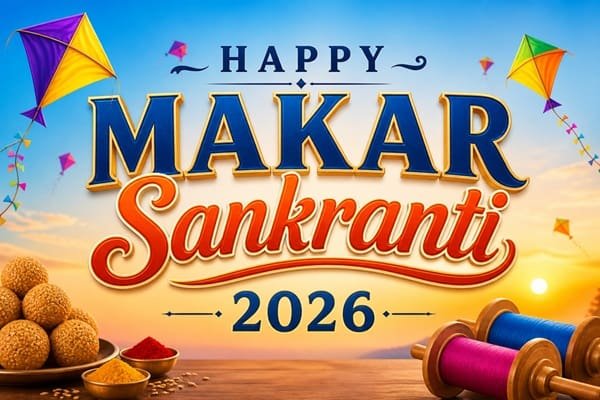
Makar Sankranti is different from most Hindu festivals. It does not follow the lunar calendar. It follows the sun. Every year, on a fixed date, the sun enters the zodiac sign of Capricorn, called Makara in Sanskrit. That moment is Makar Sankranti. This transition marks the end of the winter solstice and the beginning of Uttarayan, the northward journey of the sun. In Hindu tradition, the northern path of the sun is considered the day of the devas, the gods. It is a time of light, warmth, growth, and spiritual clarity. The festival is celebrated across India under different names, Lohri in Punjab, Pongal in Tamil Nadu, Uttarayan in Gujarat, Magh Bihu in Assam, but the essence remains the same. Gratitude to nature, celebration of the harvest, and the triumph of light over darkness.
In 2026, Makar Sankranti falls on Wednesday, 14 January. The sun enters Capricorn at exactly 7:52 AM. That moment is the beginning of the Punya Kaal, the auspicious period. The Punya Kaal lasts from 7:52 AM to 5:46 PM. Within this, the Mahapunya Kaal, the most auspicious window, runs from 7:52 AM to 9:18 AM. Any ritual performed during this window is believed to yield multiplied spiritual merit.
The Astronomical and Spiritual Meaning
The sun is not just a star in Vedic cosmology. It is a visible manifestation of divine consciousness. The sun represents clarity, vitality, wisdom, and the soul’s aspiration to rise above ignorance. When the sun enters Capricorn, a sign ruled by Shani, the meeting symbolizes harmony between father, Surya, and son, Shani. This meeting is said to resolve past karmic burdens and bring discipline and inner balance.
Uttarayan, the northward movement, is mentioned in the Bhagavad Gita. Lord Krishna says that those who die when the sun is in its northern path attain higher realms. That is the power of this period. It is a time for spiritual growth, for letting go of the past, for rising.
But the sun’s movement alone does not change you. The cosmos moves according to divine order. Your inner movement is your responsibility. The sun enters Capricorn. Your heart must enter devotion.
Punya Kaal Timings for 2026
The Punya Kaal for Makar Sankranti 2026 begins at 7:52 AM and ends at 5:46 PM. The Mahapunya Kaal, the most sacred window, is from 7:52 AM to 9:18 AM. This is the best time to take a holy dip, offer Arghya to the sun, chant mantras, and perform charity.
The timings are calculated based on the sun’s exact transit. They vary slightly by geographic location. In general, the early morning hours after sunrise are the most auspicious. Plan your rituals during the Mahapunya Kaal for maximum benefit.
But merit is not earned by the clock on the wall. It is earned by the sincerity in the heart. The timing guides you. The devotion moves you.
The Holy Bath
Taking a bath in a sacred river during Makar Sankranti is one of the most important rituals. Millions of devotees gather at the Ganga, Yamuna, Godavari, Narmada, and Kaveri. They immerse themselves in the cold water, chanting mantras, washing away their sins.
The ritual bath is symbolic. Water cleans the body. Devotion cleans the soul. Without repentance, without humility, even the holiest river is just water. The bath is a reminder to let go of past regrets, to wash away negativities, to start fresh.
If you cannot reach a river, bathe at home. Add a few drops of Ganga water to your bath. Chant the Surya Gayatri mantra while bathing. The intention matters more than the location.
Offering Arghya to the Sun God
After bathing, stand facing the east. Take a copper vessel filled with water. Add red flowers, rice, and a few drops of sandalwood paste. Slowly pour the water toward the sun, letting it stream in a steady line. Chant the Surya Gayatri mantra while offering.
Why copper? Copper is a conductor of energy. It amplifies the vibrational effect of the mantra. Offering Arghya to the sun is a way of saying thank you. The sun gives life. The sun gives light. Without the sun, nothing grows. Gratitude is the first step of devotion.
The benefits of Surya Arghya are real. It energizes the mind. It improves eyesight. It balances the body’s circadian rhythm. It fills you with positive energy.
Charity
Charity is the heart of Makar Sankranti. Giving charity on this day is considered highly meritorious. Traditional offerings include sesame seeds, jaggery, blankets, warm clothes, food grains, and cows.
Sesame seeds and jaggery are the most common. Til and gud. Eat them together. Share them with others. The phrase in many parts of India is, Til gud ghya, god god bola. Take the sesame and jaggery, and speak sweetly. The sweetness of the jaggery is a reminder to speak kindly. The sesame is a reminder of endurance, of spiritual resilience.
Donate without expectation. Do not give to impress society. Give to please God. True charity dissolves selfishness. It awakens compassion. It loosens the grip of attachment.
Feed the poor. Donate to a cow shelter. Give warm clothes to those in need. The act of giving is the act of remembering that all that you have is not yours. It is a gift. And gifts are meant to be shared.
Chanting Mantras
Chanting mantras on Makar Sankranti amplifies spiritual merit. The Surya Gayatri mantra is the most powerful for this day. Om Bhaskaraya Vidmahe, Mahatejaya Dhimahi, Tanno Aditya Prachodayat. Chant this eleven times, twenty one times, or one hundred and eight times.
The Surya Beej mantra is also effective. Om Hram Hreem Hraum Sah Suryaya Namah. Chant this in the morning, facing the east. The vibrations of the mantra align your energy with the energy of the sun.
If you know the Aditya Hridayam Stotra, chanting the opening verse is highly recommended. This stotra was recited by the sage Agastya to Lord Rama before his battle with Ravana. It invokes the power of the sun to remove obstacles and grant victory.
The Deeper Message of Makar Sankranti
Capricorn represents responsibility, structure, discipline, and spiritual maturity. When the sun enters this sign, it illuminates your life path. It asks you to look at your life. Are you moving toward light? Or are you stuck in habits that keep you in darkness?
The festival teaches you to rise above the past. To embrace transformation. To cultivate purity within. The external celebration, the kites, the sweets, the bonfires, all of it is joyful. But the real work is internal.
God does not become closer because the sun changes direction. God becomes closer when your heart turns toward him. The sun’s transit is an invitation. Accept it.
Also Read : Ayodhya Ram Mandir Free Sugam Darshan E Pass 2026: Online Booking & Timings
Regional Celebrations Across India
In Punjab, the night before Makar Sankranti is celebrated as Lohri. Bonfires are lit. People dance. Peanuts, rewri, and popcorn are offered to the fire. The fire represents the burning away of negativity.
In Tamil Nadu, Pongal is a four day harvest festival. Rice is cooked in a new pot until it overflows. Pongal means overflowing abundance. The ritual thanks the sun and the cattle for the harvest.
In Gujarat, Uttarayan is celebrated with kite flying. The sky turns colorful. Millions of kites fill the air. The kite represents the soul rising above obstacles.
In Assam, Magh Bihu is celebrated with community feasts and bonfires. In North India, devotees throng Prayagraj for the Gangasagar Snan. Khichdi is offered at temples.
One festival. Many colors. One message. Gratitude. Light. Hope.
Do’s and Don’ts
Wake up early, before sunrise. Take a holy bath during Mahapunya Kaal. Offer Arghya to the sun. Chant mantras. Donate sesame, jaggery, and blankets. Feed cows and the poor. Share til gud sweets with family and friends. Wear warm, clean clothes. Keep your mind calm and your heart grateful.
Do not consume alcohol or non vegetarian food. Do not harm animals. Do not engage in arguments. Do not sleep during the day. Do not let anger or harsh words escape your mouth.
A Final Word
Makar Sankranti is not about the date. It is about the direction. The sun moves north. Your heart must move inward. The external celebration is temporary. The internal shift lasts.
Take the bath. Offer the water. Chant the mantra. Give the charity. Fly the kite. Eat the sweet. But do it with awareness. Do it with gratitude. Do it for the love of the divine, not for the approval of the world. That is the real Sankranti. That is the real beginning.