
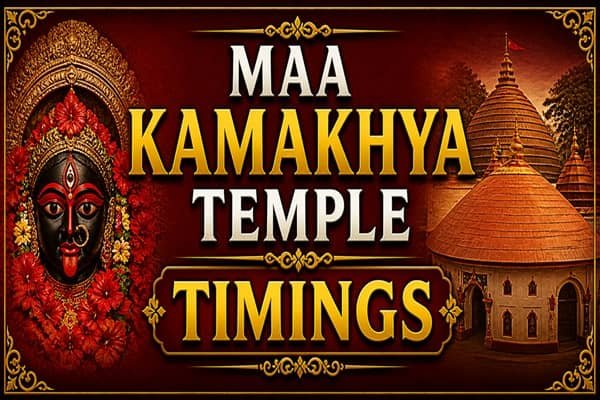
The Maa Kamakhya Temple sits on Nilachal Hill in Guwahati, Assam, overlooking the Brahmaputra River. This is not a temple where you see a carved idol of the goddess. Here, the goddess is worshipped as a yoni shaped stone, a natural rock formation that stays perpetually moist. This unique form represents the creative and regenerative power of the divine feminine. Among the fifty one Shakti Peethas, Kamakhya is one of the most powerful. It is believed that Sati’s yoni, her womb, fell here. That is why the goddess here is called Kamakhya, the one who grants desires. Devotees come seeking fertility, marriage blessings, protection, and spiritual strength.
The temple follows tantric traditions, not the usual Vedic rituals of North Indian temples. There are no grand public aartis with bells and conch shells. The worship happens inside, performed by priests following ancient tantric texts. Devotees stand outside and receive the blessing. The atmosphere is heavy, mysterious, and deeply powerful.
Daily Darshan Timings for 2026
The temple opens at 5:30 AM every day. The first ritual is Snana, the bathing of the sacred stone, from 5:30 AM to 6:00 AM. This is a quiet ritual. Only a few devotees witness it. General darshan begins at 6:00 AM and continues until 1:00 PM. The early morning hours, between 6:00 AM and 8:00 AM, are the best. The crowd is light. The air is cool. The climb up the hill is easier.
The temple then closes for an afternoon break from 1:00 PM to 2:30 PM. During these ninety minutes, the sanctum remains closed. The priests perform internal rituals. Do not come during these hours expecting darshan.
Evening darshan runs from 2:30 PM to 5:30 PM. The temple closes for the night around 6:00 PM. The evening atmosphere is different. The lamps are lit. The chants echo off the stone walls.
On Tuesdays and weekends, the crowds are significantly larger. Plan accordingly. Arrive early.
The Unique Nature of Worship
Unlike most Hindu temples where the deity is a carved idol, the Kamakhya Devi is worshipped in the form of a yoni shaped rock cleft inside a cave like sanctum. The cleft is naturally moist. Water seeps from the rock. This is considered the goddess herself. There is no face, no limbs, no form. Just the stone.
Devotees do not see the goddess in the usual sense. They stand outside the sanctum, look through a small opening, and see the priests performing rituals on the stone. The experience is not visual in the usual way. It is felt. Many devotees report chills, tears, or a deep sense of peace.
VIP Pass and Online Booking
General darshan is free. But the waiting time can be seven to eight hours on busy days. The temple offers a VIP pass that reduces the wait to one to two hours. The pass costs ₹500 per person. It gives you priority entry through a separate queue.
The VIP pass is available online through the official portal. Visit the website and create an account using your mobile number. Select your preferred date and time slot. Enter the details of up to five devotees. Aadhaar card details are required. Complete the payment online. The system generates an e pass. Download it. Take a printout and save a PDF on your phone.
On the day of your visit, carry the printed e pass and the original Aadhaar card used during booking. Arrive at least thirty minutes before your slot. Show the pass at the VIP entry gate. The security staff verifies your details and guides you to the queue.
The VIP pass is especially useful for families with children, elderly devotees, and those with limited time. The general queue on the hill can be exhausting. The climb itself is steep. Adding a long wait after the climb makes the experience difficult. The VIP pass removes that difficulty.
Slots are released up to seven days in advance. For regular days, booking a week ahead is sufficient. For festival periods like Ambubachi Mela and Navratri, slots fill up within hours of release. Book at least two to three weeks in advance during festival seasons.
Ambubachi Mela The Most Important Festival
Ambubachi Mela is the most important festival at the Kamakhya Temple. It is held every year in June. In 2026, Ambubachi Mela will be from June 22 to June 25. This festival celebrates the annual menstruation cycle of the goddess. The temple remains completely closed for three days. The sanctum is sealed. No darshan is allowed. No rituals are performed publicly.
On the fourth day, June 25, the temple reopens with grand celebrations. Thousands of devotees gather to receive prasad, a piece of red cloth believed to be blessed by the goddess. The cloth is considered highly powerful. Devotees keep it in their homes for protection and prosperity.
During the closed days, the hill is still crowded. Sadhus and tantric practitioners from all over India gather. They perform their own rituals outside the temple. The atmosphere is intense. If you plan to visit during Ambubachi, do not expect darshan. The sanctum is locked. The goddess is resting. Respect the tradition.
Chaitra Navratri runs from March 19 to March 27, 2026. This is the spring Navratri. Sharad Navratri runs from October 11 to October 20, 2026. This is the autumn Navratri, the larger of the two. Both are celebrated with special tantric pujas and rituals.
Durga Puja is from October 17 to October 21, 2026. The temple is decorated. The crowds are massive. The energy is festive. Diwali is on November 8, 2026. Evening rituals and lamp lighting ceremonies are held.
During all these festivals, the temple timings may be extended. The crowds become massive. The VIP passes sell out weeks in advance. Book early. Arrive early. Be prepared for long waits even with a pass.
Dress Code and Visitor Guidelines
The temple does not enforce a strict written dress code. But common sense applies. Wear modest clothing. Men should wear dhoti kurta or full length trousers with a shirt. Women should wear saree or salwar kameez. Shorts, sleeveless tops, and revealing clothes are not appropriate.
Leather items are not allowed inside. Belts, wallets, bags made of leather must be left outside. Alcohol and non vegetarian food are prohibited on the entire hill. Smoking is not allowed.
Mobile phones are not allowed inside the sanctum. Deposit them in the lockers near the entrance or leave them in your car. Photography is strictly prohibited inside the inner sanctum.
Remove your footwear before entering. The stone floor can be cold and wet. Wear socks if needed.
Also Read : Ayodhya Ram Mandir Free Sugam Darshan E Pass 2026: Online Booking & Timings
How to Reach Maa Kamakhya Temple
By air, the nearest airport is Lokpriya Gopinath Bordoloi International Airport, about twenty kilometers from the temple. Flights connect to Delhi, Mumbai, Kolkata, Bangalore, and other major cities. From the airport, take a taxi. The drive takes about forty five minutes.
By train, Kamakhya Junction is the nearest station, about seven kilometers from the temple. Guwahati Railway Station is eight kilometers away. Both stations connect to major cities. From the station, take an auto or taxi. The ride takes about twenty minutes.
By road, auto rickshaws, shared taxis, and app based cabs are available from anywhere in Guwahati. Local buses also run to the hill. The climb from the parking area to the temple is steep. Elderly devotees can hire palanquin services for the climb.
Accommodation Near the Temple
The Kamakhya Temple Trust runs basic guesthouses and dharamshalas on the hill. Rooms are simple and affordable. Prices range from ₹200 to ₹500 per night. Book early during festival seasons.
Private hotels in Guwahati offer more comfort. Budget hotels cost ₹800 to ₹1,500 per night. Mid range hotels cost ₹1,500 to ₹3,000. Luxury properties cost ₹3,000 to ₹8,000. Many hotels offer views of the Brahmaputra River.
During Ambubachi Mela and Navratri, book your accommodation at least one month in advance. The city fills up with pilgrims. Rooms become very scarce.
Best Time to Visit
The best months are October through March. The weather is pleasant. The temperature stays comfortable. The sky is clear. The view from the hill is beautiful.
The best days are weekdays, Tuesday through Thursday. Weekends are crowded. The best time of day is early morning, between 6:00 AM and 8:00 AM. The crowd is light. The climb is easier. The darshan is peaceful.
If you want to experience the festival energy, come for Ambubachi Mela in June or Navratri in October. But be prepared for massive crowds. The temple will be packed. The waiting time will be long even with a VIP pass. The energy, however, is unmatched.
A Final Word for First Time Visitors
The Maa Kamakhya Temple is not comfortable. The climb is steep. The queue is long. The sanctum is dark and damp. The goddess has no face. You will not see a beautiful idol decorated with jewels. You will see a rock cleft, priests chanting, and smoke from incense. That is the darshan. That is the blessing.
Some people feel nothing. Others feel everything. Both are fine. The goddess does not measure your devotion by your tears. She measures it by your presence. You climbed the hill. You stood in the queue. You came to her home. That is enough.