
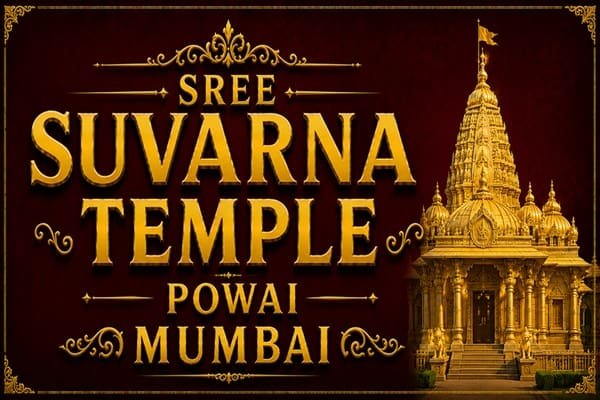
The Sree Suvarna Temple sits on the Jogeshwari Vikhroli Link Road in Powai, Mumbai. The road is busy. The traffic is loud. The high rises are close. But the temple is not loud. The gates open to a courtyard. The sound of the street fades. The temple is not ancient. It was founded in 1957 by Shree Shree Shree Suvarna Baba. The main building was completed in 1963. The architecture is not in one style. North Indian shikharas and South Indian gopurams are both present. The deities are not one. They are many. Shiva, Ganesha, Balaji, Hanuman, Shani, Sai Baba, Lakshmi, Saraswati, Nag Devi. All of them are here. The devotee does not have to choose. The temple has chosen for them.
The name Powai comes from Padmavati Devi, a local goddess. The temple is not a place of escape from the city. It is a place of pause in the city. The offices are nearby. The apartments are across the street. The devotee comes in a shirt and trousers. The office bag is left at the shoe stand. The mind is left at the door.
Daily Darshan and Aarti Timings for 2026
The temple opens at 6:00 AM every day. The morning darshan runs from 6:00 AM to 11:30 AM. The early morning hours, between 6:00 AM and 8:00 AM, are the best. The crowd is light. The city is still waking up. The morning aarti is at 6:30 AM. The lamps are lit. The chants begin.
The temple then closes for an afternoon break from 11:30 AM to 3:30 PM. During these four hours, the sanctums remain closed. The priests perform internal rituals. Do not come during these hours expecting darshan.
The evening darshan runs from 3:30 PM to 9:00 PM. The evening aarti is at 6:30 PM. This is the most attended aarti. The temple fills up. The lamps are waved. The chant is loud. The temple closes at 9:00 PM.
The afternoon aarti is at 12:00 PM, but the temple is closed for darshan at that time. The aarti is performed by the priests. The devotees cannot attend.
Special Poojas and Offerings
Abhishekam is the ritual bathing of the deity. The idol is bathed with milk, water, honey, and sandalwood paste. The ritual is performed daily. Devotees can sponsor it. The cost is not listed. Ask at the counter.
Archana is the offering of flowers and the chanting of the deity’s names. The devotee gives their name and gotra. The priest chants. The blessing is personal.
Deepa Aradhana is the offering of lamps. The lamps are lit. The wicks are dipped in ghee. The flame is waved. The darkness is pushed back.
Prasad is distributed after the poojas. The food is simple. The blessing is the same.
The Multi Deity Complex
The temple is not one shrine. It is many. Lord Shiva is in the main sanctum. The lingam is black stone. Ganesha sits to the side. The elephant head is carved from marble. Balaji is in a separate shrine. The idol is dark. The eyes are large. Hanuman stands guard. The mace is raised. The chest is open. Shani Dev is in a corner. The black idol is feared and respected. Sai Baba is in a white marble shrine. The expression is calm. The hand is raised in blessing. Lakshmi and Saraswati are together. Wealth and knowledge. The devotee prays to both. Nag Devi is worshipped on Nag Panchami. The serpent goddess is feared and loved.
The devotee can walk from one shrine to the next. The circuit is short. The prayers are many. The time passes.
Festivals Celebrated at the Temple
Nag Panchami is in July or August. The crowd is massive. Milk is poured on the serpent idol. The fear is offered. Navratri is in September or October. Nine nights. The garba is danced. The dandiya is played. The temple is crowded. The energy is high. Diwali is in October or November. The lamps are lit. The temple glows. The Lakshmi Puja is performed. Ganesh Chaturthi is in August or September. The modaks are offered. The aartis are elaborate. Hanuman Jayanti is in March or April. The Hanuman Chalisa is recited. The voice is loud. The faith is strong. Shani Amavasya is observed monthly. The oil is offered. The black sesame is offered. The planet is appeased.
On all these festival days, the temple is packed. The queues are long. The wait is worth it.
Also Read : Golden Temple Amritsar Timings 2026: Darshan, Langar & Daily Ceremonies
How to Reach the Temple
By air, the nearest airport is Chhatrapati Shivaji International Airport, about twelve kilometers from the temple. From the airport, take a taxi. The drive takes about twenty to forty minutes, depending on traffic.
By train, the nearest stations are Kanjurmarg on the Central Line and Andheri on the Western Line. From Kanjurmarg, take an auto. The ride takes about fifteen to twenty minutes. From Andheri, about twenty five minutes.
By road, the temple is on JVLR. The road connects the Eastern Express Highway and the Western Express Highway. Buses, autos, and taxis are available.
Accommodation Near the Temple
Renaissance Mumbai Convention Centre Hotel is a luxury option. The rooms are large. The service is efficient. Meluha The Fern is eco friendly. The design is modern. The Residence Hotel is for longer stays. The apartments have kitchens.
Rodas Ecotel is mid range. The rooms are clean. The prices are reasonable. Hotel Peninsula Grand is popular with domestic tourists. Bloom Hotel Saki Vihar is budget friendly. Treebo Hotels and OYO Rooms are also available.
During festivals, book at least two weeks in advance. The hotels in Powai fill up.
Best Time to Visit
The best months are November through February. The weather in Mumbai is pleasant. The humidity is low. The best days are weekdays, Tuesday through Thursday. Weekends are crowded. The best time of day is early morning, between 6:00 AM and 8:00 AM. The temple opens at 6:00 AM. The morning aarti is at 6:30 AM. The crowd is light. The city is still quiet.
A Final Word for First Time Visitors
The Sree Suvarna Temple is not a quiet temple. The autos honk. The chants are loud. The devotees talk. But the deities are not in the noise. They are in the multiple shrines. Shiva is in one corner. Ganesha is in another. Hanuman is across. The devotee walks from one to the next. The body moves. The mind follows. That is the practice. Not sitting still. Moving with intention. From one god to the next. The circuit is short. The devotion is continuous. Come with your office bag. Come with your tired feet. The shoe stand is free. The blessing is free.