
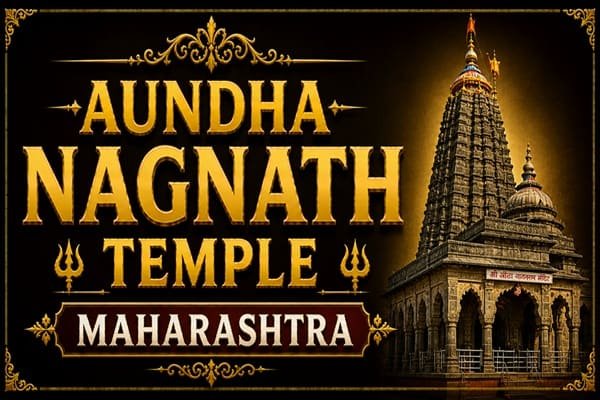
The Aundha Nagnath Temple sits in the Hingoli district of Maharashtra, in the dry plains of the Marathwada region. The land is flat. The fields are brown in summer, green in monsoon. The temple is not on a hill. It is in a village. But the power is not in the location. It is in the stone. The Jyotirlinga is one of the twelve. The name Nagnath means lord of the serpents. Shiva wears a snake around his neck. The snake is not a decoration. It is a symbol of fear conquered. The devotee comes with fear. The devotee leaves with courage. The temple is old. The current structure dates to the 13th century, built by the Seuna Yadava dynasty. But the original temple is older. Legend says Yudhishthira built it during the Pandavas’ exile. The lingam faces west. That is rare. Most Shiva temples face east. The direction is not a mistake. It is a message. The sun sets in the west. The darkness comes. Shiva faces the darkness. He is not afraid.
The temple was attacked by Aurangzeb. The story says that a swarm of bees attacked his soldiers. They retreated. The temple was damaged but not destroyed. Later, Rani Ahilyabai Holkar restored it. The Hemadpanti architecture is visible in the stone carvings. The pillars are massive. The joints have no mortar. The stones are held by gravity and faith.
Daily Darshan Timings for 2026
The temple opens at 4:00 AM every day. The first ritual is Rudrabhishek Puja at 4:05 AM. The priests chant. The water is poured. The lingam is bathed. The morning darshan runs from 4:00 AM to 9:00 PM. The early morning hours, between 4:00 AM and 7:00 AM, are the best. The crowd is light. The air is cool. The Rudrabhishek is the most powerful time.
The temple then takes a break for afternoon puja from 1:00 PM to 1:30 PM. The evening puja is from 4:30 PM to 5:30 PM. The aarti is at 12:00 PM and again at 8:30 PM. The final Shejaarti is at 11:00 PM. The temple closes at 9:00 PM on regular days.
During the Shravan month, the timings are extended. On Mondays in Shravan, the temple opens at 2:00 AM. The crowd is massive. The queue starts before dawn. On other days of Shravan, the morning darshan runs from 5:00 AM to 4:00 PM, and the evening darshan runs from 5:00 PM to 9:00 PM.
Festivals Celebrated at the Temple
Mahashivratri is the biggest festival. The temple stays open all night. The Rudrabhishek is performed every hour. The Nagarcharya procession is unique. The idol of Shiva is carried in a palkhi. The devotees follow. The chant is loud. The energy is high.
Vijayadashami is celebrated as the marriage of Shiva and Parvati. The ritual is three days after Amavasya. The temple is decorated. The prasad is distributed.
The Sant Gajanan Maharaj Palkhi Yatra passes near the temple. The devotees walk. The abhangas are sung. The connection is old.
On Nag Panchami, the serpent is worshipped. The fear is offered. The blessing is received.
The Unique West Facing Lingam
The Jyotirlinga at Aundha Nagnath faces west. The reason is the story. The Pandavas were in exile. They built the temple. They worshipped Shiva. The lingam was installed. The direction was not chosen. It was revealed. The west is the direction of the setting sun. The sun sets. The darkness comes. Shiva faces the darkness. He is not afraid. That is the message. The devotee comes with fear. The devotee sees the lingam facing the darkness. The fear reduces.
The Hemadpanti Architecture
The temple is built in the Hemadpanti style. The stones are cut with precision. No mortar is used. The joints are tight. The pillars are carved. The ceilings are decorated. The complex has 12 small Jyotirlinga temples. It has 108 temples and 68 temples dedicated to Shiva. The numbers are symbolic. 108 is sacred. 68 is the number of years of the exile.
The temple campus covers 60,000 square feet. The main sanctum is 7,200 square feet. The height is 60 feet. The structure is massive.
Also Read : Char Dham Yatra 2026: Opening Dates, Registration, Route & Complete Guide
How to Reach the Temple
By air, the nearest airport is Nanded Airport, about 65 kilometers from the temple. Flights connect to major cities. From the airport, take a taxi. The drive takes about ninety minutes.
By train, the nearest station is Nanded Railway Station, about 65 kilometers from the temple. Hingoli station is closer, about 25 kilometers, but has fewer trains. From Nanded, take a taxi or bus.
By road, the temple is connected to Nanded, Aurangabad, and Pune. MSRTC buses run regularly. Taxis are available.
Accommodation Near the Temple
Bhakt Nivas and Yatri Nivas are budget options. The rooms are simple. The prices are low. Dharamshalas are also available. During Shravan, book at least two weeks in advance. The rooms fill up.
Best Time to Visit
The best months are October through March. The weather in Marathwada is pleasant. The summer heat is gone. The winter mornings are cool. The best days are weekdays, Tuesday through Thursday. Weekends are crowded. The best time of day is early morning, between 4:00 AM and 7:00 AM. The Rudrabhishek at 4:05 AM is the most powerful. The crowd is light. The air is cool. The darkness is deep. The lamps are the only light.
A Final Word for First Time Pilgrims
The Aundha Nagnath Temple is not a luxury destination. The town is small. The hotels are basic. The food is simple. But the lingam is rare. The west facing stone is not a mistake. It is a teaching. The sun sets. The world darkens. Shiva does not turn away. He faces the darkness. That is the courage. That is the blessing. Come early. The darkness will be deep. The lamps will be lit. The chant will begin. That is the darshan. That is the gift.