
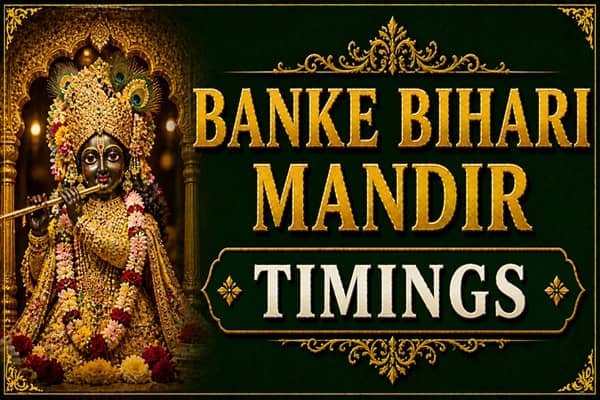
The Banke Bihari Temple in Vrindavan is different from any other Krishna temple you have visited. Here, the curtains open and close constantly. The deity appears for a few seconds, then disappears behind the cloth. Then appears again. Then disappears. This unique tradition, called the pat system, keeps devotees longing for just one more glimpse. The name Banke Bihari itself means the one who bends in three places. The idol stands in the Tribhanga posture, leaning gracefully, playing a flute. Millions come every year. The narrow lanes of Vrindavan fill with chants of Shri Banke Bihari Lal Ki Jai. If you plan to visit in 2026, knowing the timings, aarti schedule, and the truth about VIP darshan is essential.
The temple was established in 1864 by Swami Haridas, the renowned saint and musician who also mentored the legendary Tansen. According to tradition, the idol of Banke Bihari Ji appeared to Swami Haridas in Nidhivan and was later installed in this temple. The deity is self manifested, not carved by human hands. This belief adds to the temple’s spiritual power. The atmosphere inside is charged with devotion. People cry. People dance. People simply stand and stare, lost in the dark eyes of the Lord.
Daily Darshan Timings for Summer and Winter
The temple follows two different schedules based on the season. During summer, from March to October, the morning darshan begins at 7:45 AM and continues until 12:00 PM. The evening darshan starts at 5:30 PM and ends at 9:30 PM. Summer mornings are hot, but the early hours are still pleasant. Reach by 7:00 AM for a relatively peaceful experience.
During winter, from November to February, the morning darshan starts later at 8:45 AM and goes until 1:00 PM. The evening darshan begins earlier at 4:30 PM and ends at 8:30 PM. Winter evenings in Vrindavan are cold. Carry a jacket. The temple floors feel cold on bare feet. But the crowd in winter is often larger because the weather is comfortable.
The temple does not stay continuously open during these windows. There is a break in the late morning when the Rajbhog is offered and the deity rests. The evening darshan also has breaks. The famous pat system means the curtains close frequently. This is not a temple where you can stand and stare for minutes. The priests open the curtains for a few seconds, then close them. Then open again. This cycle repeats. Devotees wait for each opening, catching glimpses of the Lord between the curtains.
The Unique Aarti Schedule at Banke Bihari Temple
Banke Bihari Temple does not perform daily Mangala Aarti. This is very unusual for a Krishna temple. Devotees believe that Thakur Ji, the deity, is a child who sleeps late. Waking him early for aarti would disturb his rest. So the morning starts directly with darshan. The only Mangala Aarti happens once a year on Sharad Purnima, around 2:00 AM. On that special night, the temple follows a different schedule.
Shringar Aarti happens in the morning after the deity is dressed and decorated. In summer, Shringar Aarti is around 7:10 AM. In winter, it is around 9:00 AM. This is a beautiful time to visit. The Lord is adorned with fresh clothes, jewels, and flowers. The priests perform the aarti with lamps and incense.
Rajbhog Aarti occurs in the late morning when the bhog offering is presented. In summer, this is around 12:25 PM. In winter, between 12:00 PM and 12:30 PM. After this aarti, the temple closes for the bhog seva. The Lord rests. The doors remain shut for about an hour before the morning session ends.
Shayan Aarti is performed at night before the temple closes. This happens at 9:25 PM in both summer and winter. The temple then closes gradually, usually by 9:30 PM. This aarti is peaceful. The lamps are waved gently. The chants are soft. Devotees feel a sense of calm as the Lord prepares to rest.
The Truth About VIP Darshan
Many websites advertise Banke Bihari Temple VIP darshan tickets. Here is the truth. The temple does not have an official VIP darshan system. There are no paid queues. No online VIP booking. No premium entry passes. The temple management follows the traditional open darshan system. Everyone waits in the same line.
During major festivals or specific temple organized seva programs, a few special access slips may be issued. But these are rare. They should not be confused with regular VIP darshan. Do not pay money to anyone promising guaranteed priority entry. The temple does not authorize such services.
If you want a faster darshan, the best strategy is to visit early on a weekday. Tuesday through Thursday mornings are the least crowded. Sunday and Saturday evenings are the most crowded. Ekadashi days, Janmashtami, and Holi draw massive crowds. Avoid these days unless you are prepared for intense waits.
Some local tour operators offer VIP darshan assistance. They do not provide official tickets. They provide guidance on timing, help navigate the queues, and sometimes arrange for local volunteers to assist. This is not VIP entry. It is crowd management support. Understand the difference before paying.
Sevas and Offerings You Can Participate In
General darshan is free. You can enter, wait in the queue, and have darshan without paying anything. Rajbhog Bhog offering allows you to sponsor the midday meal offering. You can offer sweets or fruits before the noon bhog. This requires coordination with the temple priests.
Shayan Seva is the evening ritual before closing. This is free to attend. Flower and Prasad offerings can be made by purchasing items from the shops outside the temple. You hand the offering to the priest, who presents it to the deity. Annadanam is the donation based meal service for devotees. You can contribute to the temple’s free meal program.
Festival sevas during Janmashtami, Holi, and Radhashtami have varying costs. These need to be booked in advance through the temple office. Do not expect to arrange these on the day of the festival. Plan at least two to three weeks ahead.
The sevas listed on many websites are not always available. Temple practices change. The best approach is to visit the temple office, speak to the staff, and ask about current seva options. Be flexible. The temple is old. It follows old traditions. Not everything is digitized or standardized.
How to Reach Banke Bihari Temple
By train, the nearest major station is Mathura Junction, about ten to twelve kilometers from Vrindavan. Mathura connects to Delhi, Agra, Jaipur, Lucknow, and many other cities. From Mathura, take an auto or e rickshaw to Banke Bihari Temple. The ride costs between ₹100 and ₹150. The drive takes about thirty minutes depending on traffic.
By road, Vrindavan is well connected via the Yamuna Expressway and National Highway 19. Buses from Delhi, Agra, Jaipur, and Noida run regularly. If you drive, the Yamuna Expressway from Delhi takes about three to four hours. Parking near the temple is limited. Use paid parking lots a short walk away.
By air, the nearest airport is Agra, about seventy kilometers away. Agra has limited flights. The best connectivity is from Delhi Airport, about 165 kilometers away. From Delhi, you can take a taxi or a bus. The drive takes about four to five hours.
Local transport in Vrindavan is dominated by e rickshaws and shared autos. They are cheap and plentiful. From the Vrindavan bus stand to Banke Bihari Temple, the e rickshaw fare is around ₹20 per person. Walking is also possible if you are staying close. The temple is in the heart of the old city.
Also Read : Padmanabhaswamy Temple Darshan 2026: VIP Booking, Timings, Dress Code & Tickets
Where to Stay Near the Temple
Vrindavan has accommodation for every budget. Dharamshalas cost between ₹600 and ₹900 per night. These are basic. Shared bathrooms, simple beds, and no air conditioning. Ideal for solo pilgrims on a tight budget. Book in advance during festival seasons. The popular dharamshalas fill up quickly.
Budget hotels cost between ₹800 and ₹1,200 per night. These are close to Banke Bihari Temple or ISKCON. Rooms have attached bathrooms. Some have air conditioning at higher rates. Clean but not luxurious.
Mid range hotels cost between ₹1,500 and ₹2,500 per night. These offer comfortable modern rooms, hot water, and reliable service. Families often prefer this category. During Janmashtami, Holi, and Kartik month, prices increase. Rooms become scarce. Book at least three to four weeks in advance.
If you are visiting during peak seasons, consider staying in Mathura instead. Mathura has more hotels. The drive from Mathura to Vrindavan takes thirty minutes. You can stay in Mathura and drive to Vrindavan for darshan in the morning.
Must Visit Temples Near Banke Bihari Ji
Do not limit your Vrindavan visit to just Banke Bihari Temple. The town is filled with sacred shrines. ISKCON Vrindavan is about two kilometers away. The temple is peaceful. The kirtans are soul touching. The food at the Govinda’s restaurant is excellent.
Prem Mandir is further out but worth the drive. The marble architecture is stunning. The evening light and sound show is beautiful. The gardens are well maintained. Go after sunset for the best experience.
Radha Raman Temple is very close to Banke Bihari. The deity here is self manifested. The temple is smaller and quieter. Many devotees visit both temples in one trip. Nidhivan is believed to be the site where Krishna performs his Raas Leela every night. The area is densely forested and deeply spiritual.
Seva Kunj is another sacred spot. It is believed to be where Krishna and Radha met. The atmosphere is serene. The gardens are peaceful. Radha Vallabh Temple follows a different tradition of worship centered on Radha as the supreme deity.
Best Time to Visit in 2026
The best months are November through February. The weather is cool and pleasant. You can stand in queues without sweating. The winter sun is gentle. The evenings are crisp. The only downside is that the morning darshan starts later, at 8:45 AM, so you lose the very early morning calm.
The best days are Tuesday through Thursday. Weekends are crowded. Monday is also busy because many devotees arrive after visiting nearby temples. The best time of day is right when the darshan begins. For summer, reach by 7:30 AM. For winter, reach by 8:30 AM. The first hour of darshan is the least crowded.
Avoid Janmashtami unless you want the festival experience. The temple is packed. The queues stretch for hours. Holi in Vrindavan is world famous. The temple celebrates with flowers and colors. It is beautiful but intensely crowded. Kartik month, October to November, is deeply spiritual. Devotees perform parikrama and attend daily aartis. The crowd is moderate.
Estimated Budget for a Vrindavan Trip
A two day trip to Vrindavan is affordable. Bus or train travel from Delhi costs between ₹500 and ₹1,000. Stay in a budget hotel costs between ₹800 and ₹1,500 per night. Food and local travel cost between ₹500 and ₹800 per day. Temple offerings are optional, budget ₹100 to ₹300.
The total per person for two days is between ₹2,000 and ₹3,000. Traveling with family or friends reduces the per person cost. Shared autos and group accommodation bring the budget down further.
A Final Word for First Time Visitors
The Banke Bihari Temple is chaotic. The lanes are narrow. The crowds are thick. The queues are long. The curtains open and close so fast that you might miss the glimpse you waited an hour for. That is the point. Banke Bihari Ji teaches you that devotion is not about getting what you want. It is about longing. It is about standing in the queue again and again, hoping for just one more look. When you finally see those dark eyes, even for a second, you understand why people come back.
Come early. Come on a weekday. Do not expect VIP entry. Do not carry your phone. Leave your expectations outside. And when the curtains part, do not blink.