
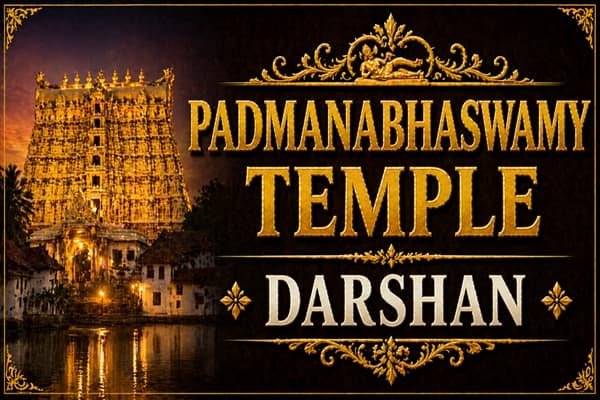
The Sree Padmanabhaswamy Temple in Thiruvananthapuram is not like other temples. The deity here is Lord Vishnu in the Anantha Shayana posture, reclining on the cosmic serpent Adi Sesha. From his navel emerges a lotus bearing Lord Brahma. A Shiva lingam sits on his right hand, symbolizing the unity of Vaishnavism and Shaivism. This unique depiction alone makes the temple special. But the temple gained global fame for another reason. The discovery of its underground vaults, filled with unimaginable treasures, put Padmanabhaswamy in headlines worldwide. Yet, for devotees, the treasure is secondary. The real wealth is the darshan itself.
The temple sits in the East Fort area of Thiruvananthapuram, the capital of Kerala. The name Thiruvananthapuram itself means the city of Lord Anantha. The temple has been the spiritual and political heart of the Travancore kingdom for centuries. The royal family ruled not as kings but as servants of Lord Padmanabha. That tradition continues to this day. Visiting this temple requires planning. The dress code is strict. The darshan timings are specific. Special darshan and VIP tickets are available but must be booked correctly. This guide covers every detail.
Daily Darshan Timings You Must Know
The temple follows a very specific schedule. The first darshan of the day is called Nirmalya Darshan. It happens from 3:30 AM to 4:45 AM. This is the most auspicious time. The priests remove the previous day’s decorations and offer fresh flowers. The deity is seen in his most natural state. The crowd at this hour is small. The atmosphere is deeply peaceful.
Special Darshan is available from 6:30 AM to 7:00 AM. This is a paid slot with quicker entry. General Darshan runs from 8:30 AM to 10:00 AM. This is the free queue. The waiting time can be long on weekends. Midday Darshan happens from 11:45 AM to 12:00 PM. This is a short window. The temple then closes for a break.
Evening Darshan runs from 5:00 PM to 6:15 PM. Extended Darshan is from 6:45 PM to 7:20 PM. The final slot of the day is VIP Darshan from 8:30 PM to 9:00 PM. Many devotees consider this the most peaceful time. The crowds are lighter. The temple lamps create a magical glow.
VIP Darshan and Special Darshan Options
The temple offers several paid darshan options. Special Darshan costs ₹150. This gives you access to a faster queue. For ₹180, you get Special Darshan with prasadam. VIP Darshan for two people with a pooja thali costs ₹250. This is ideal for couples or family members traveling together.
For those who want a deeper experience, longer ritual packages are available. Nirmalyam to Deeparadhana costs ₹3,000. This covers the rituals from the early morning opening until the lamp offering. Nirmalyam to Usha Pooja costs ₹4,000. Nirmalyam to Pantheeradi costs ₹5,000. Half Day Pooja, covering morning rituals until afternoon, costs ₹12,000. The most elaborate is the Udayasthamana Pooja, a full day ritual costing approximately ₹25,000.
These longer packages allow you to witness the temple rituals up close. You are not just a visitor. You become a participant. The priests chant mantras. The offerings are made in your presence. The experience transforms from sightseeing to worship.
How to Book Online and Offline
Online booking is the most convenient method. Visit the official website. Create a simple account. Choose the type of darshan or pooja you want. Select your preferred date. The system shows available time slots. Enter your personal details exactly as they appear on your ID proof. Complete the payment using UPI, debit card, credit card, or net banking.
After successful payment, you receive a QR code ticket via email and SMS. Download this ticket. Take a printout and also save a PDF on your phone. On the day of your visit, carry the printed ticket or show the QR code on your phone. The staff scans it at the entrance.
Offline booking is also available. Counters near the temple entrance sell special and VIP tickets. However, the number of offline tickets is limited. On weekends and festival days, they sell out quickly. Arrive early in the morning to secure a slot. Offline booking works best for last minute plans. Online booking is always more reliable.
Strict Dress Code for Men and Women
The temple enforces a very strict dress code. Men must wear a dhoti or mundu. No shirts are allowed inside the sanctum. You can carry an angavastram, a cloth draped over the shoulder. Pants, jeans, shorts, and shirts are not permitted. If you arrive in western clothes, the security staff will refuse entry.
Women must wear a saree, set mundu, or salwar kameez with dupatta. Long skirts with a blouse are also acceptable. Western outfits like jeans, leggings, skirts, and sleeveless tops are prohibited. The temple does not make exceptions.
If you forget appropriate clothing, worry not. Shops near the temple rent dhotis and sarees. The rental fee is nominal. But arriving prepared saves time and hassle. Women wearing salwar kameez must also cover their legs with a dhoti while entering the inner sanctum. This additional cloth is usually available for rent at the entrance.
The dress code is not arbitrary. It maintains the sanctity and traditional character of the temple. When everyone dresses according to centuries old customs, the atmosphere remains focused on devotion, not on fashion. Respect the rule. It is part of the experience.
Rules About Phones, Cameras, and Belongings
Mobile phones are not allowed inside the temple. Neither are cameras, electronic gadgets, or leather items. Bags and large purses are also prohibited. There are cloakrooms near the entrance where you can deposit these items. The service is safe and affordable.
Do not try to sneak your phone in. The security checks are thorough. If caught, you will be asked to leave the queue and deposit the item. This wastes your time and disrupts other devotees. Leave your phone in your car or at your hotel. Better yet, leave it entirely. The temple is a place to disconnect from the world and connect with the divine.
Photography is strictly prohibited inside the complex. The temple management takes this rule seriously. Do not even take out your phone to check the time. The security staff watches for violators.
Entry Only for Hindus
The temple permits entry only to Hindus. This is not a new rule. It has been the tradition for centuries. The temple authorities may ask for proof of religion at the entrance. Carry any document that shows your religious affiliation if asked. Non Hindus are not allowed inside. They can view the temple from the outside and explore the East Fort area, which has many other attractions.
Best Time to Visit in 2026
The best months are October through February. The weather in Thiruvananthapuram is pleasant during these months. The humidity drops. The temperature stays between 22 and 30 degrees Celsius. The post monsoon greenery makes the city beautiful.
The best days are Tuesday through Thursday. The crowds are lighter. Weekend darshan queues are significantly longer. The best time of day is early morning for Nirmalya Darshan at 3:30 AM or late night for VIP Darshan at 8:30 PM. Both slots offer a calm, peaceful atmosphere.
Avoid visiting during major festivals like Laksha Deepam, Painkuni Utsavam, and Alpashy Utsavam unless you specifically want to experience the festival energy. During these times, the temple is packed. Special darshan and VIP tickets sell out weeks in advance. Book early or visit during non festival periods.
Also Read : Sri Ranganathaswamy Temple Travel Guide 2026: Darshan Timings, Sevas & Tickets
Major Festivals at the Temple
The Painkuni Festival is a ten day celebration. It starts with flag hoisting and ends with a grand procession to Shanghumugham Beach for the idol immersion. The royal family conducts the palli vetta, or royal hunt ceremony, on the ninth day.
Alpasi Thiruvonam honors Lord Padmanabhaswamy’s appearance before the sage Divakara Muni. This is considered the main annual festival of the temple. Karthika Deepam, celebrated in November and December, involves lighting lamps around the temple complex. The full moon night in the Kartika constellation makes the event special.
Panguni Uthiram, in March or April, celebrates the wedding anniversary of Lord Padmanabhaswamy with his consorts Sridevi and Bhudevi. Devotees pray for marital harmony and domestic bliss. Aadi Pooram, in July or August, is the birthday of the main deity. Grand pujas, bhajans, and abhishekams mark the occasion.
During all these festivals, the temple is beautifully decorated. Special rituals are performed. The crowds swell into the tens of thousands. If you plan to visit during a festival, book your VIP darshan and accommodation at least one month in advance.
How to Reach the Temple
By air, Trivandrum International Airport is about six kilometers away. Direct flights connect to major Indian cities and international destinations like Colombo, Dubai, and Singapore. From the airport, take a taxi or auto. The drive takes about twenty minutes.
By train, Thiruvananthapuram Central Railway Station is just one kilometer from the temple. This station connects to all major cities in India. From the station, you can walk or take an auto. The walk takes about ten minutes. The auto ride costs around ₹30.
By road, the East Fort Bus Stand is within walking distance. State transport buses operate from all parts of Kerala and neighboring states. The city is well connected by national highways. If you drive, parking near the temple is limited. Arrive early or use public transport.
Accommodation Near the Temple
Several hotels and guesthouses operate within walking distance of the temple. Budget options range from ₹800 to ₹1,500 per night. Mid range hotels cost between ₹1,500 and ₹3,000. Luxury properties charge upwards of ₹5,000.
During festival seasons, book your stay at least two weeks in advance. The city sees a surge of pilgrims. Rooms become scarce. Prices increase. Hotels like Hotel Rajadhani, Lalit Mahal, and Hotel Highland are popular choices. For a more comfortable stay, consider the premium hotels near the city center.
If you prefer the serenity of the backwaters, Kovalam Beach is just sixteen kilometers away. Staying in Kovalam and driving to the temple for darshan works well. The drive takes about thirty minutes. You get the best of both worlds, a beach resort and a temple pilgrimage.
Nearby Attractions to Explore
Kuthiramalika Palace, also known as the Puthenmalika Palace, sits right next to the temple. Built by Maharaja Swathi Thirunal, this palace displays Travancore royal artifacts and intricate wooden architecture. The palace is open to visitors.
Napier Museum is about two kilometers away. The museum houses a rich collection of archaeological relics, bronze idols, old jewelry, and ivory sculptures. The building itself is an architectural masterpiece. The zoo next to the museum is one of the oldest in India.
East Fort area has bustling markets. Chalai Market is open 24 hours. You can buy fresh produce, traditional crafts, spices, and local snacks. The market is a sensory overload in the best possible way. Walking through the narrow lanes after your temple darshan gives you a taste of local life.
For nature lovers, Neyyar Dam is thirty kilometers away. The drive takes about an hour. The dam offers boating, picnicking, and views of the Western Ghats. The nearby wildlife sanctuary is home to elephants, tigers, and leopards.
Kanakakunnu Palace is another heritage spot. The palace hosts cultural events and exhibitions. The gardens are well maintained. The evening cultural performances are worth attending.
A Final Word for First Time Visitors
The Sree Padmanabhaswamy Temple is not a museum. It is a living, breathing center of worship. The rituals have been performed without interruption for centuries. The priests know the mantras by heart. The devotees come with tears in their eyes. That is the real treasure of this temple, not the gold in the vaults.
Come early. Wear the right clothes. Book your VIP darshan online. Keep your phone in the locker. And when you finally stand before the reclining Lord, with the lamps flickering and the chants echoing, close your eyes. You are standing in a tradition that has outlasted empires. That is not nothing.