
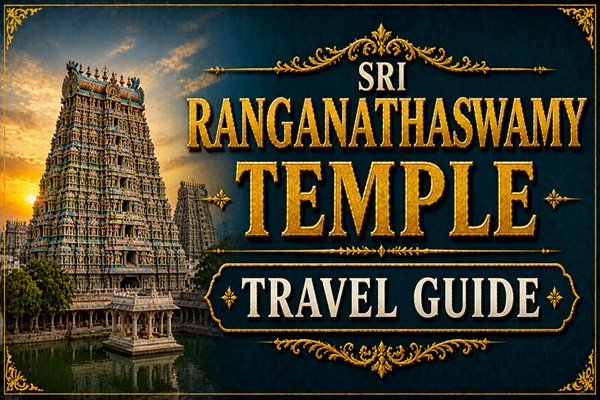
The Sri Ranganathaswamy Temple in Srirangam, Tamil Nadu, holds a remarkable title. It is the largest functioning Hindu temple complex in the world. The sheer scale of this temple is hard to grasp until you walk through its corridors. Twenty one towering gopurams, countless mandapams, and a golden vimanam that shines in the sun. But this temple is not just about size. It is about the reclining form of Lord Ranganatha, an avatar of Lord Vishnu, resting on the serpent Adisesha. Devotees have been coming here for centuries, seeking moksha or liberation from the cycle of birth and death. If you plan to visit in 2026, this guide covers every detail you need.
Srirangam is an island town, formed by the waters of the Kaveri River and its tributary Kollidam. The temple complex covers 156 acres. It is surrounded by seven concentric walls, representing the seven layers of consciousness. The main deity, Lord Ranganatha, sleeps facing south, which is unusual for Vishnu temples. This unique orientation adds to the temple’s mystery and spiritual power.
Daily Darshan Timings You Must Know
The temple opens at 6:00 AM every day. The first ritual is Suprabhatam, the waking up prayer for the Lord. This happens exactly at 6:00 AM. Devotees who attend this experience a quiet, peaceful morning. The temple is relatively empty. The chants echo through the ancient corridors.
Vishwaroopa Seva follows from 6:45 AM to 7:15 AM. This is a special early morning darshan. You can see the deity in his full glory, with lamps lighting up his face. The cost for this seva is ₹100. Many devotees consider this the best time for darshan. The crowd is still thin, and the atmosphere feels fresh.
At 8:00 AM, Thirumanjanam takes place. This is the sacred bath, or Abhishekam, performed on the deity. Priests pour milk, curd, honey, ghee, and sandal paste over the idol. The ritual lasts about forty five minutes. Devotees can sponsor this seva for ₹250. Watching the Abhishekam while chanting mantras is a deeply moving experience.
Sahasranama Archana happens at 9:00 AM. The priests recite the thousand sacred names of Lord Vishnu. This chanting creates a powerful vibration inside the sanctum. Devotees can participate by offering their name and gotra for a personalized prayer. The cost for Archanai is just ₹50.
Morning general darshan runs from 9:00 AM to 12:00 PM. This is when the temple gets busy. Weekends and holidays see long queues. The free darshan line moves slowly. If you are short on time, consider the special darshan ticket for ₹100. It moves much faster.
The temple closes for a break from 12:00 PM to 1:15 PM. Madhyanha Pooja happens during this window. The sanctum remains closed to devotees. Use this time to have lunch, rest, or explore the outer corridors. The temple complex has several shaded areas where you can sit.
Afternoon darshan resumes at 1:15 PM and continues until 6:00 PM. The crowd is usually lighter in the early afternoon. By 4:00 PM, the numbers start climbing again. The evening aarti, called Sayaratchai, takes place at 6:00 PM. This is a beautiful ritual. Lamps are waved before the deity while priests sing devotional songs.
The final ritual of the day is Ardha Jama Pooja, running from 8:00 PM to 9:00 PM. After this, the temple closes for the night. Evening darshan between 6:45 PM and 9:00 PM offers a calm, pleasant experience. The summer heat has faded. The temple lights create a magical glow.
Darshan Ticket Prices for Every Budget
The temple offers multiple darshan options. Free darshan costs zero rupees. You stand in the general queue. On weekdays, the wait might be thirty to sixty minutes. On weekends and festivals, the wait can stretch to two or three hours. If you have time and patience, this is perfectly fine.
Special Darshan costs ₹100. This queue moves faster. Your waiting time reduces to fifteen to thirty minutes. Many devotees choose this option. It balances cost and convenience. Quick Darshan costs ₹200. This is ideal for rush hours. The queue is even shorter. You complete your darshan in ten to fifteen minutes.
VIP Darshan costs ₹500. This gives you priority entry. During peak days and major festivals, this is the fastest option. The temple staff guides you through a separate line. The darshan itself is not longer, but the wait is much shorter.
All ticket types lead to the same sanctum. You see the same deity. The blessing is the same. The only difference is how long you wait. Choose based on your schedule and budget. There is no wrong choice.
Popular Sevas You Can Book in Advance
Participating in a seva adds a deeper layer to your visit. Vishwaroopa Seva costs ₹100 and runs from 6:45 AM to 7:15 AM. This early morning darshan includes sacred chants. The lamps highlight the deity’s features in a way that regular daylight does not. Book this at least a day in advance.
Thirumanjanam costs ₹250. This is the Abhishekam ritual. The priests bathe the idol with holy items. You can watch from close quarters. The mantras recited during this ritual are ancient and powerful. Many devotees sponsor this on their birthdays or anniversaries.
Kalyanotsavam costs ₹500. This is the symbolic divine marriage ceremony of Lord Ranganatha. The ritual is elaborate and beautiful. It lasts about an hour. This seva is especially popular for couples seeking blessings for a happy married life.
Sahasranama Archana costs ₹150. The priests recite the thousand names of Lord Vishnu. You can also opt for a simple Archanai for ₹50. Your name and gotra are mentioned during the prayer. This personalized touch makes the seva feel special.
Dolotsavam costs ₹300. This is the swing ritual. The deity is placed on a beautifully decorated swing. Priests swing the idol gently while singing devotional songs. Unjal Seva costs ₹250. This is another swing service performed in the evening.
Thulabharam costs ₹100. You offer items equal to your body weight. The items can be sugar, rice, jaggery, or even coins. This ritual symbolizes surrendering your ego and material attachments to the Lord.
Vastra Samarpanam costs ₹200. You offer traditional clothes to the deity. The priests dress the idol in your offering. Veda Parayanam costs ₹200. The priests recite Vedic hymns in your presence.
Most sevas have limited slots. During Vaikunta Ekadasi and other major festivals, they fill up weeks in advance. Book online through the official temple portal. If you are not comfortable with online booking, visit the counter a day before your planned seva.
Aarti and Pooja Schedule Throughout the Day
The aartis are the heart of the temple’s daily rhythm. Viswaroopa Seva from 6:00 AM to 7:15 AM is the first major event. The atmosphere at this hour is serene. Morning Pooja from 7:15 AM to 9:00 AM includes devotional offerings and chants.
Morning general darshan from 9:00 AM to 12:00 PM is the busiest window. The temple fills with devotees. The sound of bells and chanting creates a lively, energetic atmosphere. Afternoon Pooja from 12:00 PM to 1:15 PM happens when the sanctum is closed to general devotees. Priests perform the midday rituals in private.
Evening darshan from 6:45 PM to 9:00 PM offers a different mood. The lamps are lit. The incense smoke fills the corridors. The chanting becomes more intense. Many devotees prefer this time because the heat of the day has passed.
During Vaikunta Ekadasi, the pooja schedule extends late into the night. The temple stays open until midnight. Thousands of devotees pour in. If you plan to visit during this time, book your darshan and accommodation months in advance.
Also Read : Swami Samarth Mandir Akkalkot Timings 2026: Darshan, Aarti & Online Booking
How to Reach Srirangam Temple
By train, Srirangam has its own railway station. It is just one kilometer from the temple. However, not all trains stop here. The nearest major railhead is Tiruchirappalli Junction, about nine kilometers away. Trichy Junction connects to Chennai, Bangalore, Hyderabad, Madurai, and Coimbatore. From the station, take a taxi or auto. The ride costs about ₹200 to ₹250. Local buses also run between Trichy and Srirangam. The bus fare is approximately ₹11.
By road, Srirangam is well connected. Regular buses operate from Trichy. Autos and taxis are available round the clock. If you are driving, the roads are well maintained. Parking near the temple can be challenging on weekends. Arrive early to secure a spot.
By air, Tiruchirappalli International Airport is the nearest. It is about fifteen kilometers from the temple. Direct flights connect Trichy to Chennai, Bangalore, Hyderabad, Kochi, and international destinations like Colombo and Kuala Lumpur. From the airport, taxis are available. The drive takes about thirty minutes.
Accommodation Options for Every Budget
Yatri Nivas, run by TTDC, is a popular choice. It offers affordable, family friendly rooms. The property is about two kilometers from the temple. Rooms are clean but basic. Prices range from ₹800 to ₹1,500 per night. Book early during festival seasons.
Arya Vaishya Satram is an economical stay option. It is located very close to the temple premises. The rooms are simple. The prices are low. This is ideal for pilgrims who only need a bed for a few hours. No luxury, just functionality.
Local hotels and lodges near the temple offer rooms between ₹800 and ₹2,000 per night. The prices vary based on room type and amenities. Air conditioning costs extra. During Vaikunta Ekadasi and Brahmotsavam, room rates can double. Book at least two weeks in advance.
For more comfortable stays, consider Trichy city. Several mid range and premium hotels operate there. The drive from Trichy to Srirangam takes only fifteen to twenty minutes. This option works well for families who prefer modern amenities.
Strict Dress Code and Entry Rules
The temple enforces a strict dress code. Men must wear a dhoti or pyjama with a shirt. Kurtas are also acceptable. Jeans, shorts, trousers, and T shirts are not allowed. If you arrive in western clothes, the security staff will deny entry. There are no exceptions.
Women must wear a saree, half saree, or salwar kameez. Western outfits like skirts, jeans, and sleeveless tops are prohibited. The dress code is not a suggestion. It is a rule. Respect it.
Footwear must be deposited outside the temple. The shoe stand charges about ₹5 per pair. Keep the token safely. You will need it to retrieve your shoes. Leather items like belts and bags are best left in your car or hotel.
Mobile phones are allowed inside the complex, but photography and videography are strictly prohibited. The temple staff actively watches for violations. If you are caught taking photos, the phone may be confiscated. Keep your phone in your bag or pocket.
The main entrance for devotees is the Southern Rajagopuram. Use this gate. Maintain silence inside the corridors and near the sanctum. Loud conversations disturb other devotees and break the spiritual atmosphere.
Best Time to Visit for a Peaceful Experience
The best months are October through March. The weather is pleasant. The temperature stays between 20 and 30 degrees Celsius. The early mornings are cool. The evenings are comfortable. This is the peak tourist season, but the temple is never empty.
The early mornings on weekdays are the least crowded. Arrive by 6:00 AM. Attend Suprabhatam and Vishwaroopa Seva. Complete your darshan by 9:00 AM. You will avoid the heavy crowds that arrive later in the morning.
If you want to visit during a festival, choose Vaikunta Ekadasi. This occurs in December or January. The temple stays open late. The rituals are elaborate. The energy is electric. But the crowds become massive. Be prepared for long waits even with VIP tickets.
For photography of the temple architecture, visit in the late afternoon. The setting sun casts a golden light on the gopurams and mandapams. The crowds are slightly thinner. You can take your time exploring the outer corridors.
Must-Visit Places Inside the Temple Complex
The Rajagopuram is the tallest temple tower in South India, standing at 239.5 feet. You can see it from a distance. Walking through its base feels humbling. The carvings on the tower depict scenes from Hindu mythology. Take a few minutes to look up.
The Golden Vimanam is the tower above the sanctum. It is plated with gold and believed to radiate divine energy. When the sun hits it, the gold shines brilliantly. The Vimanam is visible only from inside the temple complex.
Ramanujacharya Sannidhi houses the preserved body of the great saint Sri Ramanuja. He lived in the 11th and 12th centuries and revitalized the temple. Devotees offer prayers here before entering the main sanctum. The atmosphere in this shrine is calm and introspective.
Ranga Vilas Mandapam features stunning sculptures depicting the avatars of Lord Vishnu. The workmanship is incredible. Each pillar tells a story. Take your time walking through this hall. A guide can explain the carvings, but even without one, the artistry speaks for itself.
Garuda Mandapam features a massive idol of Garuda, the eagle mount of Lord Vishnu. The idol faces the sanctum. Garuda’s hands are folded in prayer. The devotion captured in stone is moving.
Vellayi Gopuram was built in memory of a devadasi who devoted her life to the deity. The story is tragic and beautiful. The gopuram stands as a testament to her love.
Sesha Raya Mandapam has ancient carvings depicting historical and religious events. The pillars here are especially striking. Some show horses and warriors. Others show gods and goddesses.
A unique belief says that finding four specific carvings in the sixth prakaram brings moksha. The carvings are a lame horse, a blind fish, Lord Krishna, and Hanuman. Devotees walk the corridor specifically to spot these. Make it a scavenger hunt during your visit.
Final Words for First Time Visitors
The Sri Ranganathaswamy Temple is overwhelming. The size, the crowds, the rituals, it can all feel like too much. Start small. Do not try to see everything in one visit. Choose one darshan, one seva, and one aarti. Focus on that. The temple is ancient. It will wait for you to return.
Follow the dress code. Buy a special darshan ticket if you are short on time. Keep your phone in your bag. Walk slowly through the corridors. And when you finally stand before the reclining Lord Ranganatha, close your eyes. Just for a moment. Let the sound of the mantras fill your ears. Let the smell of incense settle in your memory. That moment is why you came.