
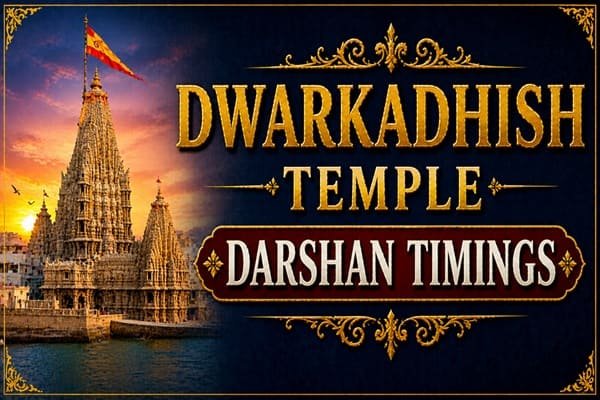
The Dwarkadhish Temple in Dwarka, Gujarat, stands as a magnificent tribute to Lord Krishna, the king of Dwarka. This ancient temple, also known as the Jagat Mandir, is one of the four sacred Char Dham pilgrimage sites in India. Millions of devotees walk through its gates every year, seeking a glimpse of the four armed black stone idol of Lord Krishna. But visiting without knowing the schedule can lead to frustration. The temple opens and closes multiple times each day for various rituals. This guide gives you the complete schedule so you can plan your visit perfectly.
Dwarka itself is one of the Sapta Puris, the seven most sacred cities in Hinduism. According to legend, Lord Krishna established his kingdom here after leaving Mathura. The temple was originally built over 2,500 years ago by Vajranabh, Krishna’s great grandson. The current structure, with its five stories and 72 intricately carved pillars, showcases the stunning Chalukya style of architecture. The 43 meter high spire flies a flag every day, symbolizing Krishna’s dominion over time and space.
Daily Darshan Timings at a Glance
The temple operates in two sessions each day, with a long break in the afternoon. The morning session runs from 6:30 AM to 1:00 PM. The evening session runs from 5:00 PM to 9:30 PM. The temple remains completely closed from 1:00 PM to 5:00 PM. During this break, the priests perform maintenance, clean the sanctum, and prepare the deity for the evening rituals. Do not plan your visit during these hours. You will be turned away at the gate.
The first darshan of the day begins at 6:30 AM. The final darshan ends at 9:30 PM. But here is the important thing. The temple does not stay continuously open during these windows. It opens and closes multiple times for various bhog offerings and rituals. Understanding this schedule helps you avoid arriving during a closed period. The table below shows the complete daily schedule.
Complete Daily Schedule with Opening and Closing Times
The morning schedule starts early. Mangla Aarti takes place between 6:30 AM and 7:00 AM. The temple remains open during this aarti. Devotees can attend and receive blessings. After the aarti, Mangla Darshan runs from 7:00 AM to 8:00 AM. This is the first proper darshan window of the day. The crowd is usually moderate at this hour.
From 8:00 AM to 9:00 AM, the temple closes for Snan Vidhi, which is the Abhishek Puja or ritual bath of the deity. Priests bathe the idol with milk, curd, honey, ghee, and sugar. No devotees are allowed inside during this hour.
The temple reopens from 9:00 AM to 9:30 AM for Shringar Darshan. During this window, the deity is dressed in beautiful clothes and adorned with jewels. Watching the decorated idol is a visual treat. Then from 9:30 AM to 9:45 AM, the temple closes again for Snan Bhog, an offering of food.
Another Shringar Darshan window opens from 9:45 AM to 10:15 AM. Then the temple closes from 10:15 AM to 10:30 AM for Shringar Bhog. Following this, Shringar Aarti takes place from 10:30 AM to 10:45 AM. Devotees can attend this aarti.
The temple closes from 11:05 AM to 11:20 AM for Gwal Bhog. After this, darshan is allowed from 11:20 AM to 12:00 PM. Then the temple closes from 12:00 PM to 12:20 PM for Raj Bhog, the grand midday meal offering. Darshan reopens from 12:20 PM to 1:00 PM. Then the temple closes for the afternoon break from 1:00 PM to 5:00 PM.
The evening session begins at 5:00 PM with Uthappan. This ritual marks the awakening of the deity from the afternoon rest. Darshan is allowed from 5:00 PM to 5:30 PM. Then the temple closes from 5:30 PM to 5:45 PM for Uthappan Bhog.
Darshan reopens from 5:45 PM to 7:15 PM. This is the longest evening darshan window. Many devotees prefer this time. Then the temple closes from 7:15 PM to 7:30 PM for Sandhya Bhog. Following this, the grand Sandhya Aarti takes place from 7:30 PM to 7:45 PM. This aarti is the most attended ritual of the day. The temple fills with chanting, bells, and lamps.
The temple closes from 8:00 PM to 8:10 PM for Shayan Bhog. Darshan reopens from 8:10 PM to 8:30 PM. Shayan Aarti, the bedtime aarti, takes place from 8:30 PM to 8:35 PM. After this, darshan is allowed from 8:35 PM to 9:00 PM. The temple closes from 9:00 PM to 9:20 PM for Banta Bhog and Shayan, the final ritual of putting the deity to rest. Final darshan happens from 9:20 PM to 9:30 PM. Then the temple closes at 9:30 PM sharp.
Aarti Timings You Should Not Miss
The aartis at Dwarkadhish Temple are the most spiritually uplifting experiences. Each aarti has a different mood and energy. Mangla Aarti at 6:30 AM is serene and peaceful. The temple is relatively empty. The morning light filters through the windows. Priests chant softly. Attending this aarti is a quiet, personal experience.
Shringar Aarti happens around 10:30 AM. By this time, the deity is fully dressed and decorated. The idol looks magnificent. The aarti celebrates the beauty of the Lord. Devotees often describe this aarti as visually stunning.
Sandhya Aarti at 7:30 PM is the grandest. The temple is packed. Lamps are waved in synchronized motions. Bhajans fill the air. The energy becomes electric. If you can only attend one aarti, make it this one.
Shayan Aarti at 8:30 PM is the final ritual of the day. The deity is prepared for sleep. The atmosphere becomes calm and introspective. Many devotees feel a sense of closure and peace after this aarti.
Best Time to Visit the Temple
The best months to visit are October through March. The weather in Dwarka during these months is pleasant. The temperature stays comfortable. You can stand in queues without feeling exhausted. The sea breeze adds to the pleasant atmosphere.
Avoid the summer months from April to June. The temperature can cross 40 degrees Celsius. The stone floors become hot. Standing in long queues becomes physically draining. If you must visit in summer, come only for the morning aarti and leave before noon.
The monsoon months from July to September bring heavy rain. Dwarka receives moderate rainfall. The temple remains open, but travel can be challenging. Roads may flood. The sea becomes rough. However, the rain washes the city clean. The greenery around Dwarka looks beautiful during this season.
The best day of the week to visit is Monday through Thursday. Weekends see larger crowds. Friday and Saturday are also busy. Sunday is the most crowded day. If you want a peaceful darshan, plan for a Tuesday or Wednesday.
Special Darshan and Seva Booking
The temple offers special darshan options for devotees who want to skip the regular queue. Special Darshan costs ₹200 per person. This gives you priority entry and reduces waiting time significantly. VIP Darshan costs ₹500 per person. It offers an even faster entry and sometimes a closer view of the deity.
Various sevas can be booked online through the official temple website. Milk Seva, Flower Seva, and Bhog offerings are available. You can sponsor a specific ritual on a particular date. The priest performs the ritual in your name. This is a meaningful way to connect with the Lord, especially if you cannot be physically present.
During festivals like Janmashtami, the demand for special darshan and sevas increases dramatically. Book at least two to three weeks in advance. The online booking system is simple. Visit the official website, create an account, select your seva, choose a date, and complete the payment. Keep the confirmation on your phone.
Dress Code and Rules for Visitors
The temple enforces a strict dress code. This is not optional. Men must wear dhoti or kurta with pyjama or long pants. Shirts and trousers are allowed but traditional attire is preferred. Shorts, jeans, and t shirts are not permitted. The security staff will send you back if you are inappropriately dressed.
Women must wear saree or salwar kameez. Half sarees are also acceptable. Western dresses, skirts, sleeveless tops, and jeans are not allowed. The dress code maintains the sanctity of the space. Respect it.
Remove your footwear before entering the temple premises. There are shoe stands near the entrance. Pay a small fee, usually 5 to 10 rupees, to deposit your shoes. Keep the token safely. You will need it to retrieve your shoes.
Carry your mobile phone and other electronic devices at your own risk. Photography is strictly prohibited inside the sanctum. Security guards will ask you to delete any photos taken inside restricted areas. Large bags and cameras are not allowed. There are cloakroom facilities where you can deposit these items for a small fee.
How to Reach Dwarkadhish Temple
Dwarka is well connected by road, rail, and air. By train, Dwarka Railway Station is about 2.5 kilometers from the temple. The station connects to major cities like Ahmedabad, Jamnagar, Rajkot, and Mumbai. From the station, auto rickshaws and taxis are readily available. The ride to the temple takes about ten minutes.
By air, the nearest airport is Jamnagar Airport, about 130 kilometers away. Jamnagar has flights from Mumbai and other major cities. From the airport, you can hire a taxi to Dwarka. The drive takes about two and a half to three hours. The next nearest airport is Rajkot, about 200 kilometers away.
By road, Dwarka is connected by National Highway 51. Ahmedabad is about 440 kilometers away. The drive takes around eight to nine hours. State transport buses run regularly from Ahmedabad, Rajkot, Jamnagar, and Somnath. Private taxis are also available. The roads are in good condition.
Also Read : Sri Somnath Jyotirlinga Temple: Darshan Timings, History, Pujas & Complete Guide 2026
Nearby Attractions to Explore
Do not limit your visit to just the temple. The Dwarka region has several important spiritual sites. Rukmini Devi Temple is about 2 kilometers from the main temple. This temple is dedicated to Lord Krishna’s chief queen, Rukmini. The architecture is beautiful. The atmosphere is peaceful. Many devotees visit both temples in one trip.
Gomti Ghat is adjacent to the temple. The Gomti River flows here. Devotees take a holy dip before entering the temple. The ghat is always busy with pilgrims. The Sudama Setu bridge connects the temple to the ghat. The bridge opens at 7:00 AM and closes at 1:00 PM, then reopens at 4:00 PM and closes at 7:30 PM.
Bet Dwarka is an island about 30 kilometers from Dwarka. It is believed to be the original residence of Lord Krishna. You need to take a ferry from Okha port to reach the island. The boat ride takes about twenty minutes. The temple on the island is smaller but equally sacred.
Nageshwar Jyotirlinga Temple is about 17 kilometers from Dwarka. This is one of the twelve Jyotirlingas of Lord Shiva. The towering statue of Lord Shiva is impressive. The temple is less crowded than Dwarkadhish. Combine both visits in one day if you start early.
Tips for First Time Visitors
Arrive at least thirty minutes before the aarti you want to attend. The queues form early. Good spots fill up quickly. For the Sandhya Aarti at 7:30 PM, try to reach by 6:45 PM. The crowd starts gathering well before the aarti begins.
Carry a water bottle. The temple complex has drinking water stations. Refill your bottle there. This saves money and reduces plastic waste. Food is available at shops outside the temple. Simple vegetarian meals, snacks, and tea are sold. For a proper meal, go to the restaurants near the temple.
Wear comfortable clothing that also meets the dress code. Light cotton clothes work best for most months. For winter visits between December and February, carry a light jacket. The evenings can get cool. The stone floors of the temple feel cold on bare feet. Wearing socks helps.
Keep your valuables secure. Do not carry expensive jewelry or large amounts of cash. Use the cloakroom for your bags and electronic devices. The facility is safe and affordable. Do not give money to touts or unauthorized priests. All official offerings should be made at the temple counters.
The Spiritual Significance of Dwarkadhish
Dwarka is not just a temple town. It is the kingdom of Lord Krishna. According to the Mahabharata, Krishna established this city after leaving Mathura. The city was planned and built by Vishwakarma, the divine architect. It was said to be prosperous, beautiful, and impregnable. After Krishna left the earth, the city was submerged by the sea.
The idol in the temple is a four armed black stone statue. Lord Krishna holds a conch, a discus, a mace, and a lotus. The idol faces west, towards the sea. This is unusual because most temple idols face east. The west facing idol symbolizes that the Lord is turned towards the sea where the original city of Dwarka is submerged.
Dwarkadhish means the King of Dwarka. This form of Krishna emphasizes his royal and powerful aspect. Unlike the playful child of Vrindavan or the wise charioteer of the Gita, here Krishna is the sovereign ruler. The temple treats him as a king, with bhog offerings, dress changes, and aarti rituals that mirror royal court ceremonies.
A visit to Dwarkadhish Temple is not just a pilgrimage. It is an audience with a king. The rituals, the darshan windows, the aartis, all follow the protocol of a royal court. When you stand before the black stone idol, you are not just a devotee. You are a subject paying respects to your ruler. That sense of order and hierarchy gives the temple its unique character.
A Final Word
The schedule of Dwarkadhish Temple can seem complicated. So many opening and closing times. So many aartis and bhog offerings. But do not let the complexity overwhelm you. Start with the simple plan. Reach by 6:15 AM. Attend Mangla Aarti. Have darshan between 7:00 AM and 8:00 AM. Return for Sandhya Aarti at 7:30 PM. That simple plan gives you two of the best spiritual experiences the temple offers.
Dwarka is not like other temples. You are visiting the kingdom of the Lord of the universe. The rules, the timings, the dress code, all of it exists to maintain the dignity of that kingdom. Follow them with respect, not frustration. And when you finally see the four armed idol, decorated with flowers and jewels, standing tall against the backdrop of the sea, you will understand why people have been coming here for over two thousand years. Jai Dwarkadhish.