
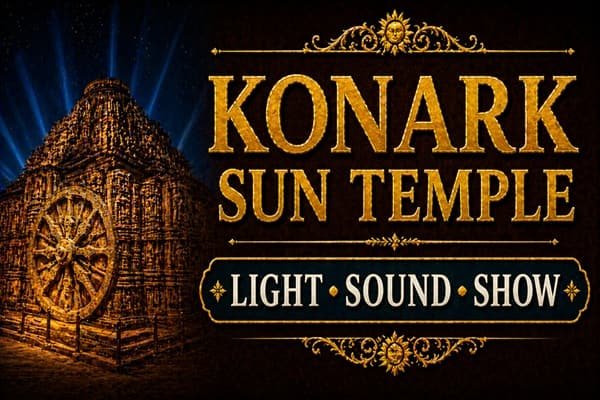
The Konark Sun Temple stands as a giant stone chariot on the shores of Odisha. During the day, tourists admire its intricately carved wheels and stone horses. But when the sun sets, something magical happens. The temple comes alive with lights, music, and stories. The light and sound show transforms this 13th century marvel into a living, breathing narrator of its own history. If you are planning a trip to Konark, missing this evening experience would be a real loss.
Built by King Narasimhadeva I of the Eastern Ganga dynasty, the temple was designed as a massive chariot for the Sun God Surya. Twenty four carved wheels represent the hours of the day. Seven horses pull the entire structure, symbolizing the days of the week. The architects created something that was not just a temple but a cosmic timepiece. The light and sound show captures this brilliance and presents it in a way that simple daytime viewing cannot match.
Understanding the Show Timings for 2026
The show operates twice every evening. The timings change with the seasons because the show depends on darkness to create its effects. From March to November, when the days are longer, the first show starts at 7:30 PM. The second show follows at 8:20 PM. Each show runs for about 40 minutes.
From December to February, the sun sets much earlier. The first show begins at 6:30 PM during these winter months. The second show starts at 7:20 PM. The gates open thirty minutes before each show. Arriving early allows you to collect your wireless headphones and choose good seats. The seating capacity is limited to about 200 to 250 people per show. Latecomers often end up in less comfortable spots.
Check the season before you plan your evening. A visitor arriving in June expecting a 6:30 PM show would be disappointed. Similarly, a December visitor who thinks the show starts at 7:30 PM would miss the first performance entirely. Always confirm the timings based on your travel month.
Ticket Prices for Temple Entry and the Show
The pricing system separates temple entry from the light and sound show. You need both tickets if you want to see the temple during the day and return for the evening show. Indian nationals pay ₹40 for temple entry. Visitors from SAARC and BIMSTEC countries also pay ₹40. Foreign nationals from other countries pay ₹600.
The light and sound show ticket costs ₹30 for everyone. There is no distinction based on nationality for the show. Children under five years enter the temple for free. Their show ticket also costs ₹30. So an Indian adult paying for temple entry and the show spends ₹70 total. A foreign national pays ₹630 total.
Tickets are available online through the ASI e ticketing portal and the Odisha Tourism official website. Buying tickets online saves time and guarantees your seat. On site tickets are also sold at the temple entrance, but queues can be long. During peak tourist season, shows often sell out. Online booking is strongly recommended.
How to Book Your Tickets Online
Booking online takes only a few minutes. Visit the official ASI e ticketing portal or the Odisha Tourism website. Create a simple account using your mobile number and email. Browse to the Konark Sun Temple section. Select either temple entry only or the combined temple and show ticket.
Choose your preferred show date and timing. The system shows available slots. Pick the language you want for the show. Hindi, English, and Odia are available. Enter the names and ages of all visitors. Complete the payment using credit card, debit card, UPI, or net banking.
After payment, download your e ticket. Take a printed copy and also save a PDF on your phone. On the day of the show, arrive at the venue thirty minutes early. Show your ticket at the entrance. Collect your wireless headphones. The staff directs you to the seating area.
If your booking fails due to a technical error, try again after a few minutes. The portal handles heavy traffic during release times. If the show gets canceled due to rain or technical issues, the ticket is usually valid for another day. Contact the ASI helpline or the Odisha Tourism desk for refund assistance. Keep your booking confirmation screenshot as proof of purchase.
Languages and the Wireless Headphone System
The Konark light and sound show uses a wireless headphone system that was quite advanced when introduced. Each visitor receives a pair of headphones at the entrance. You hear the narration clearly in your chosen language. No speakers blast audio into the open air. This preserves the peaceful ambiance of the temple at night.
Three language options are available. Hindi serves most domestic travelers. English works for international tourists and urban Indian visitors. Odia connects local audiences to their regional heritage. The narration is identical in quality across all three languages. Select your preference during booking. The headphones are distributed based on your booking choice.
The audio quality is excellent. The music mixes traditional Odia instruments with modern sound design. The narrator’s voice fills your ears while the temple glows with changing lights. You learn about the temple’s history, its architectural secrets, and the legends associated with the Sun God. Without the headphones, the show would be just pretty lights. With them, it becomes a complete educational and emotional experience.
What to Expect During the 40 Minute Show
The show begins with the lights dimming slowly. The temple, which you saw clearly during the day, now stands in silhouette. Then soft lights start illuminating specific sections. A wheel lights up here. A horse emerges from the darkness there. The music begins quietly and builds in intensity.
The narration starts with the story of King Narasimhadeva I. You learn why he built this temple and what he hoped to achieve. Then the show explains the symbolism of the chariot. The twenty four wheels, the seven horses, the intricate carvings of daily life, all get their moment in the light.
The narration covers the myths of Surya, the Sun God, who rides his chariot across the sky. It talks about the temple’s decline and how the ASI restored it. The show does not shy away from the fact that much of the temple is now in ruins. But it frames the ruins not as a failure but as a testament to time’s passage.
The final few minutes are the most spectacular. All the lights focus on the main sanctum. The music reaches a crescendo. The narrator concludes with a message about preserving heritage. Then the lights fade to black. The temple returns to its silent, dark form. Visitors sit in quiet for a moment before the house lights come on.
Best Time to Visit for the Show
The ideal months are October through March. The weather is cool and pleasant. Evenings are comfortable for sitting outdoors. Clear skies make the lighting effects look their best. December is especially special because the Konark Dance Festival happens around the same time. You can watch classical dance performances during the day and the light and sound show in the evening.
Avoid the monsoon months from July to September. Rain can cancel the show without warning. The humidity makes sitting outdoors uncomfortable. The summer months from April to June are very hot. The show still operates, and crowds are thinner. But the heat can drain your energy, especially if you also toured the temple during the day.
If you want a less crowded experience, visit on a weekday. Tuesday, Wednesday, and Thursday see fewer tourists. Weekends and public holidays fill the seating capacity quickly. The first show of the evening is usually less crowded than the second show. Plan accordingly.
How to Reach Konark for the Evening Show
Reaching Konark is straightforward. The temple sits about 35 kilometers from Puri and 65 kilometers from Bhubaneswar. Both cities serve as good bases for your visit.
From Puri, the drive takes about one hour. Buses run regularly between the two cities. Private taxis and cabs are available for a more comfortable journey. Auto rickshaws are better for shorter trips, not for a 35 kilometer drive. The road is in good condition.
From Bhubaneswar, the drive takes about one and a half to two hours. Bhubaneswar Airport is the nearest airport. From there, hire a taxi directly to Konark. State transport buses also run on this route. If you are coming from Puri railway station, the station is 35 kilometers from Konark. Taxis and buses are available at the station.
For those driving their own vehicle, parking is available near the temple entrance. The spaces fill up quickly before the show. Arrive early to secure a spot.
Also Read : Kainchi Dham: Complete Guide to Neem Karoli Baba Ashram, Timings, Stay & History
Where to Stay Near Konark
Konark is a small town. Accommodation options are limited but adequate. Yatri Niwas, run by Odisha Tourism, offers clean and affordable rooms. It is located within walking distance of the temple. This is the most convenient option for show attendees.
Several budget guesthouses operate within two kilometers of the temple. Prices range from 800 to 1,500 rupees per night. The rooms are basic but clean. Do not expect luxury. Expect a bed, a fan, and an attached bathroom.
Many visitors choose to stay in Puri instead. Puri is just one hour away and has many more hotel options. From budget lodges to mid range hotels, Puri offers variety. The drive to Konark for the show and back to Puri after the show is manageable. Just ensure your taxi waits for you or pre book a return cab.
Nearby Attractions to Complete Your Trip
Do not leave Konark after just the show. The area has several attractions worth exploring. Chandrabhaga Beach is just three kilometers from the temple. The beach offers stunning sunset views. Local legend connects this beach to the temple’s mythology. A quick visit before the show adds to the experience.
The Konark Archaeological Museum sits within the temple complex. It displays sculptures, artifacts, and architectural fragments recovered from the site. Entry costs only ₹10. The museum helps you understand what you saw during the day. Visit it in the afternoon before the show.
Ramachandi Temple is about eight kilometers from Konark. Located near the Kushabhadra River, this temple offers a peaceful, spiritual atmosphere. It is far less crowded than the Sun Temple. Combine a visit here with your Konark trip for a more rounded experience.
For those with more time, Puri Beach is 35 kilometers away. The beach is lively, with food stalls and local vendors. The Jagannath Temple in Puri is another major attraction. Many travelers combine Puri, Konark, and Bhubaneswar into a single Odisha heritage tour.
Tips for the Best Show Experience
Arrive at least thirty minutes before showtime. This gives you time to collect headphones, find your seat, and settle in. Late arrivals cause disturbance to other viewers and often get poor seating positions.
Dress comfortably. The show takes place outdoors on stone benches. For winter visits between December and February, carry a light jacket. The evening breeze can feel chilly. For summer visits, wear light, breathable clothing. Bring a bottle of water.
Photography is allowed, but do not use flash. The flash disturbs other visitors and ruins the carefully designed lighting effects. Keep your phone on silent. The sound of a ringing phone breaks the magic for everyone around you.
Maintain silence during the narration. The wireless headphones deliver clear audio, but loud conversations nearby still cause distraction. Respect the experience for others. After the show ends, exit calmly. The staff needs to reset the venue for the next show.
Is the Show Worth the Extra Cost
The show ticket costs only ₹30. That is an incredibly low price for what you receive. Forty minutes of professionally produced narration, a wireless headphone system, and a beautifully lit UNESCO World Heritage site. There is no argument against the value.
But a more important question is whether the show adds to your understanding of the temple. The answer is yes. Daytime viewing shows you the carvings and the architecture. The show explains why they exist. You learn the stories behind the stones. The temple becomes more than a beautiful ruin. It becomes a meaningful symbol of India’s artistic and spiritual heritage.
First time visitors should absolutely attend. Repeat visitors might skip it if they have seen it before. But even then, the show evolves slightly over time. New research leads to updated narration. The lighting technology improves. A second visit years later can still feel fresh.
The Konark Sun Temple Light and Sound Show is not just entertainment. It is education wrapped in art. It is history delivered through technology. And it happens every single evening, waiting for you to come and listen.