
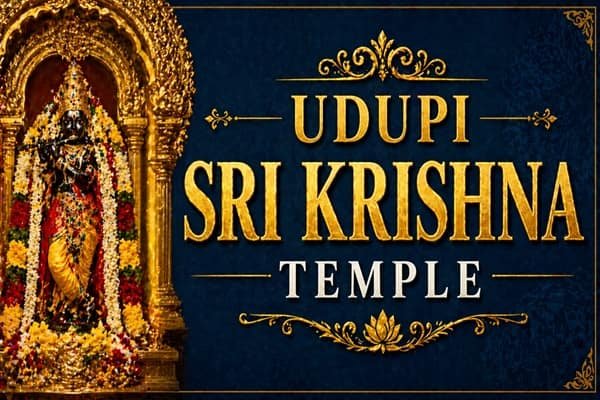
The Udupi Sri Krishna Temple is not just another temple in South India. It is a place where the Lord himself turned around to bless a devotee who was denied entry. That story alone tells you how different this temple is. Millions of pilgrims visit Udupi every year to catch a glimpse of Lord Krishna through a small silver window. That view, limited to just nine holes, has become one of the most famous darshans in the country. This guide covers everything you need to know before you go.
Udupi is often called the Mathura of South India. The comparison makes sense. Just as Mathura in Uttar Pradesh celebrates Lord Krishna’s birth, Udupi celebrates his presence in a form that is unique and deeply personal. The deity here is not a grand king or a powerful warrior. He is Balakrishna, a small boy. That innocence draws devotees in a way that grandness sometimes cannot.
The Fascinating Story Behind the Temple
The history of this temple begins in the 13th century with a saint named Sri Madhvacharya. He was the founder of the Dvaita school of Vedanta, a philosopher, and a deeply devoted soul. One day, he was performing his morning prayers on Malpe Beach, which is very close to Udupi. Looking out at the sea, he noticed a ship struggling against strong winds and high waves. The ship was in danger of sinking.
Madhvacharya used his spiritual powers to calm the waters and save the ship. The grateful captain came to thank him. When Madhvacharya asked what the ship carried, the captain showed him a large ball of gopichandana, a type of clay used for making sacred marks. Madhvacharya felt something divine inside that ball. He opened it carefully. Inside was a beautiful idol of Lord Krishna covered in sandalwood paste.
This idol was no ordinary statue. It is believed that the celestial architect Vishwakarma himself had carved it. Madhvacharya took the idol back to Udupi and established the temple. He placed the idol facing west, toward the sea where it was found. This was unusual because most temple idols face east. But here, the Lord looks west, as if still watching the ocean that brought him to his devotees.
The Unique Darshan Through Kanakana Kindi
The most famous feature of the Udupi Sri Krishna Temple is the way devotees see the Lord. You do not walk directly in front of the idol. Instead, you stand behind a silver plated window that has nine small holes. This window is called the Navagraha Kindi. Through these nine holes, you catch a glimpse of young Krishna decorated with jewels and flowers.
But there is another window that carries an even more powerful story. On the western side of the temple, there is a small window called Kanakana Kindi. This is the Window of Kanakadasa. The story goes back to the 16th century. A saint named Kanakadasa, who was a great devotee of Lord Krishna, came to Udupi. He was from a community that was considered low caste at that time. The temple priests refused him entry.
Kanakadasa did not get angry or leave. Instead, he went to the back of the temple, stood outside, and began singing prayers to Lord Krishna through a small crack in the wall. He sang with such pure devotion that the idol of Lord Krishna turned around to face west. The Lord created a small window in the wall and gave darshan to his devotee. That window is now the Kanakana Kindi. A tower called Kanaka Gopura stands over it.
To this day, devotees can look through this window before entering the temple. They see the Lord from the same spot where Kanakadasa stood. It is a reminder that devotion matters more than any rule created by humans. The Lord does not see caste or status. He sees the heart.
Temple Architecture and Layout
The architecture of the Udupi Sri Krishna Temple follows traditional Kerala style. The roof slopes down and is covered with red tiles. This design helps manage the heavy rainfall that the region receives. Walking through the complex, you notice how clean and peaceful everything feels. The management takes great care in maintaining the premises.
Inside the main sanctum, the idol of Lord Krishna faces west. Around him, you find shrines dedicated to other deities. Lord Ganesha sits in one corner. Lord Hanuman meditates in another. There is also a shrine for Garuda, the eagle mount of Lord Vishnu. Each small shrine adds to the spiritual atmosphere of the place.
Behind the main sanctum stands the Chenna Keshava shrine. Here, Lord Vishnu holds his four traditional symbols. The shanku or conch, the chakra or discus, the gadha or mace, and a lotus. The eastern entrance of the sanctum remains closed all year except on Vijayadashami day. On that single day, the doors open, and devotees can see the Lord from the east side. It is a rare and special darshan.
The temple complex also contains the Madhava Sarovar, a sacred pond. Devotees often sit by its steps after darshan. The water is considered holy. Next to the pond, there is the Anantheshwara Temple and the Chandramouleeshwara Temple. These Shiva temples existed even before the Krishna temple was built. The area was already sacred. The name Udupi comes from the word Udupa, which means moon. It connects to the Chandramouleeshwara temple, where Lord Shiva wears the moon on his hair.
Daily Rituals and Darshan Timings
The temple opens very early in the morning. The first darshan starts at 4:30 AM. Devotees who come at this time experience a calm, quiet atmosphere. The priests perform the morning rituals with gentle chanting. The sound of bells fills the air. If you want a peaceful darshan without large crowds, this is the best time.
The temple remains open through the day with breaks. The morning session runs from 4:30 AM to around 12:30 PM. The temple closes for a few hours in the afternoon. The evening session begins again at around 4:00 PM and continues until 9:30 PM. The final aarti marks the closing of the temple for the night.
Between these timings, the priests perform multiple poojas. Each pooja has its own significance. Some involve offering food. Others involve decorating the idol with flowers and jewels. Devotees can watch these rituals from the designated areas. Large television screens inside the complex also show live feeds of the poojas for those who cannot get a front view.
The Famous Paryaya Festival
Udupi temple has a unique system of management. The Ashta Mathas, or eight monasteries, take turns governing the temple. Sri Madhvacharya established these eight mathas and named them after the villages where they are located. They are Palimaru, Adumaru, Krishnapura, Puttige, Shiroor, Sode, Kaniyooru, and Pejavara.
Each matha gets a turn to administer the temple for two years. This two year period is called the Paryaya. When the two years end, the responsibility passes to the next matha in sequence. The handover ceremony is a grand festival. Thousands of devotees gather to witness it. The new matha brings its own priests and makes changes to certain rituals. The entire town celebrates during this time.
This system has continued for centuries without interruption. It ensures that no single matha holds power permanently. Each matha brings fresh energy and new ideas while maintaining the core traditions. Devotees traveling to Udupi during a Paryaya year experience special celebrations and decorations.
Anna Dana The Free Meal Service
One of the most beautiful practices at the Udupi Sri Krishna Temple is the Anna Dana. The temple provides free meals to every devotee who visits. No one leaves this temple hungry. You do not need to prove anything or pay anything. You simply walk into the dining hall and receive a wholesome vegetarian meal.
The food is simple but delicious. Rice, sambar, rasam, vegetables, curd, and payasam. The same meal served to thousands of people every single day. The kitchen operates like a well oiled machine. Volunteers work tirelessly to chop vegetables, cook, and serve. The tradition of feeding devotees goes back centuries. The temple believes that serving food is serving the Lord himself.
Do not miss this experience. Eating in the massive dining hall surrounded by hundreds of other pilgrims creates a sense of community. You sit on the floor, eat with your hands, and feel deeply connected to everyone around you. The food is not just nourishment for the body. It is prasad, blessed by Lord Krishna.
Festivals Celebrated at the Temple
The Udupi Sri Krishna Temple celebrates many festivals throughout the year. The most important is Krishna Janmashtami, the birthday of Lord Krishna. The temple stays up all night singing bhajans and performing special rituals. At midnight, the exact moment of Krishna’s birth, the priests open the sanctum for a special darshan. The crowd swells to thousands. The energy becomes electric.
Saptotsava, also called the Seven Utsavas, happens in January. This is considered the annual festival of the temple. For seven days, different celebrations take place. The temple chariot, known as the Brahma Ratha, comes out during this time. The massive wooden chariot, decorated with flowers and lights, rolls through the streets as devotees pull it with ropes. Watching that chariot move is a sight you will not forget.
Ramanavami, celebrating Lord Rama’s birth, is another important festival. Holi, the festival of colors, also gets celebrated within the temple complex. The golden chariot of the temple is brought out during special occasions. Seeing the glittering chariot under the sun, pulled by devotees chanting Krishna’s name, stays in your memory long after you leave Udupi.
The Goshale and Other Facilities
The temple maintains a Goshale, a shelter for cows. Cows hold a special place in Krishna devotion. Young Krishna was a cowherd. He loved his cows more than anything. Visiting the Goshale and spending a few minutes with the cows completes the spiritual experience. You can feed them grass or simply watch them rest.
The temple also provides drinking water, pooja item shops, prasad shops, and resting rooms. If you travel with elderly family members or small children, these facilities make the visit comfortable. The entire complex is clean and well maintained. Volunteers and staff are available to guide you if you get confused.
How to Reach Udupi Sri Krishna Temple
Udupi connects well to the rest of India. The town has its own railway station. Udupi Railway Station sits about three kilometers from the temple. Almost all major trains passing through the Konkan Railway route stop here. You can find direct trains from Mumbai, Delhi, Chennai, Bangalore, and other major cities. From the station, auto rickshaws take you to the temple in ten to fifteen minutes.
By road, Udupi lies about 400 kilometers from Bangalore. The drive takes around eight to nine hours. State transport buses and private buses run frequently from Bangalore, Mangalore, and other cities. If you drive yourself, the roads are in good condition. The temple sits in the heart of the town, walking distance from the main bus stand.
The nearest airport is Mangalore International Airport, about sixty kilometers away. From the airport, you can hire a taxi or take a bus to Udupi. The drive takes about one and a half hours. Flights to Mangalore connect from major Indian cities like Mumbai, Bangalore, Chennai, and Delhi.
Best Time to Visit
You can visit the Udupi Sri Krishna Temple any time of the year. The temple does not close for any season. But the experience changes with the weather. The best time to visit is between October and March. The weather during these months remains pleasant. You can walk around the temple complex without feeling tired from humidity or heat.
The monsoon season from June to September brings heavy rain to this coastal region. The rain turns everything lush and green. The temple looks beautiful surrounded by wet, shiny leaves and clean washed air. However, travel becomes slightly difficult during heavy downpours. If you do not mind the rain, the monsoon offers a unique, quieter experience.
Summer months from April to June get hot and humid. The heat can make standing in queues uncomfortable. If you must visit in summer, come early in the morning or late in the evening. The midday heat is best avoided.
Tips for First Time Visitors
Remove your footwear before entering the temple complex. There are shoe stands near the entrance where you can deposit your shoes for a small fee. Wear modest clothing. Traditional wear is appreciated, but clean jeans and covered tops are acceptable. Avoid shorts and sleeveless clothes.
Plan to see the Lord through both windows. First, look through the Kanakana Kindi on the western side. Remember the story of Kanakadasa as you stand there. Then enter the temple and see through the Navagraha Kindi. The darshan through nine holes is unique to Udupi. Take your time. Do not rush past.
Do not miss the Anna Dana. The meal times are fixed. Ask the temple volunteers for the current timings. Reach the dining hall a little early to get a seat. The food is served until the last person is fed, so do not worry if you are late. But arriving early gives you a better experience.
Spend some time at the Madhava Sarovar. Sit on the steps. Watch the water. Listen to the temple bells from a distance. The peace you feel there is different from the peace inside the crowded sanctum. Both are valuable. Both are part of the Udupi experience.
Also Read : Arunachaleswarar Temple Giripradakshina: Distance, Timings & Complete Guide
Accommodation Near the Temple
Udupi town has accommodation for every budget. The temple itself has basic resting rooms. These are simple, clean, and very affordable. But they fill up quickly. Arrive early in the day to secure a spot.
Many private hotels sit within walking distance of the temple. Budget options cost between 500 to 1,500 rupees per night. Mid range hotels charge between 1,500 to 3,500 rupees. Luxury options are also available but limited compared to bigger cities. Book in advance if you visit during festival seasons or the Paryaya period.
Some devotees prefer staying in nearby towns like Manipal, which is just five kilometers away. Manipal has more hotel options and a different vibe. You can easily take a bus or auto from Manipal to the temple.
Nearby Places to Visit
After completing your darshan at the Sri Krishna Temple, explore the surrounding areas. Malpe Beach is just six kilometers away. A beautiful beach with golden sand and gentle waves. From Malpe, you can take a boat to St Mary’s Island. The island has unique columnar rock formations and clear water. A half day trip to the island is highly rewarding.
Kapu Beach, about fifteen kilometers from Udupi, has a lighthouse that you can climb. The view from the top stretches across the Arabian Sea. Watching the sunset from Kapu Beach is a perfect way to end your Udupi visit.
Within the town itself, visit the Anantheshwara Temple and the Chandramouleeshwara Temple. These are older than the Krishna temple and hold their own spiritual significance. The architecture is different, and the atmosphere is quieter.
A Final Word
The Udupi Sri Krishna Temple teaches you something important. The Lord turned around for a devotee who was not allowed inside. That means no door is truly closed to sincere faith. Your caste, your status, your money, none of it matters. What matters is the devotion in your heart.
Walk through the Kanakana Kindi. Stand where Kanakadasa stood. Look at the Lord through those nine holes. Eat the free meal. Sit by the pond. Listen to the bells. By the time you leave, you will understand why millions return to Udupi again and again. The Lord is waiting. He has been waiting since the 13th century. He will not turn you away.