
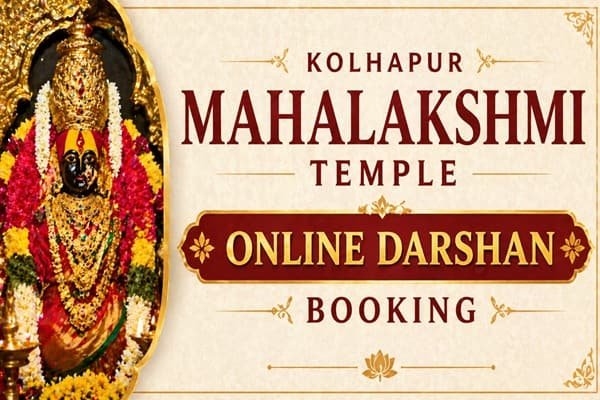
The Kolhapur Mahalakshmi Temple stands as one of India’s most powerful Shakti Peethas. Millions of devotees visit every year to seek blessings from Goddess Ambabai, the divine mother of wealth and prosperity. But navigating the temple system without proper information leads to long waits and missed opportunities. This guide changes that. You will learn exactly how to book your darshan online, understand the seva ticket prices, plan around the daily schedule, and make your visit smooth and spiritually fulfilling.
Shree Mahalakshmi Temple, also known as Ambabai Mandir, sits in the heart of Kolhapur city in Maharashtra. Built during the 7th century CE under the Chalukya dynasty, this ancient temple holds immense historical and religious value. The main deity is Goddess Mahalakshmi, the consort of Lord Vishnu and the goddess of wealth, fortune, and prosperity. According to Hindu tradition, completing pilgrimages to Tirumala Venkateswara Temple, Kolhapur Mahalakshmi Temple, and Padmavathi Temple together brings immense blessings and spiritual merit.
Walking into this temple feels different from other shrines. The stone carvings, the black stone idol of the goddess standing two feet and eight and a half inches tall, and the constant sound of bells create an atmosphere of deep devotion. The goddess holds a mace, a discus, a shield, and a bowl, symbolizing protection, power, and abundance.
Understanding the Online Darshan E Pass System
The temple management introduced an online e pass system to handle the growing number of visitors. This system saves you hours of standing in queues. You book a specific time slot, arrive at that time, and enter through a dedicated line. The old days of pushing through crowds without any plan are over.
Visit the official temple website for all bookings. Look for the E Darshan Pass or Online Darshan option on the homepage. Click it, and the system shows you available dates and time slots. Choose what works best for your travel schedule. Then fill in your personal details including your full name, age, gender, phone number, and ID proof number. Aadhaar card works perfectly for this.
Review every detail before submitting. A small spelling mistake on your name can create problems at the entrance. After submission, the system generates your e pass with a unique QR code. Download this PDF file immediately. Save it on your phone and also take a printed copy as backup. On the day of your visit, reach the temple at least fifteen to twenty minutes before your slot. The volunteers scan your QR code, verify your ID, and guide you inside.
The e pass system works wonderfully during peak seasons. Navratri, Diwali, and Margashirsha month see enormous crowds. Without an online booking, you might wait three to four hours or more. With the e pass, you complete darshan in a fraction of that time.
Complete Daily Temple Timings and Pooja Schedule
The temple follows a precise daily schedule of rituals. Each ceremony holds deep meaning and connects devotees to the goddess in a unique way. Knowing these timings helps you plan which aartis and poojas you want to experience.
The temple opens at 4:00 AM every day without exception. The first ritual is Padyapuja and Mukhmarjan at 5:00 AM. Padyapuja means worshipping the divine feet of the goddess. It is a humble act of surrender. Following this, Kakad Aarti takes place from 5:30 AM to 6:00 AM. This morning aarti is considered highly auspicious. The sound of bells, the chanting of mantras, and the lamps waving before the deity create a magical experience.
Morning Mahapuja happens at 8:00 AM. This is a longer, more elaborate ritual. At 9:30 AM, the temple offers Naivedya, which is holy food offering to the goddess. Afternoon Mahapuja takes place at 11:30 AM. Then at 1:30 PM, Alankar Pooja occurs where the deity is beautifully decorated with flowers, jewels, and clothes.
The evening starts with Dhuparati at 8:00 PM. Dhup means incense. The air fills with fragrant smoke as devotees chant and sing. The final ritual of the day is Shejarti at 10:00 PM. This is the bedtime aarti where devotees bid goodnight to the goddess. The temple closes at 10:30 PM.
If you want a peaceful, uncrowded experience, visit between 4:00 AM and 8:00 AM. The atmosphere feels calm and meditative. For those who love vibrant energy and chanting, the evening hours between 7:00 PM and 10:00 PM offer a different kind of beauty.
Seva Ticket Prices for Different Rituals
Participating in a seva means you actively sponsor or take part in a specific ritual. The temple offers several sevas at different price points. Each one connects you more deeply to the goddess.
Padya Pooja costs 350 rupees. In this ritual, priests symbolically wash the feet of the deity. It represents humility and respect. Kumkum Archana costs 550 rupees. Devotees offer red kumkum powder to the goddess while chanting her names. This ritual is especially popular among women seeking blessings for family well being.
Panchamrut Abhishek costs 750 rupees. Panchamrut is a mixture of five holy ingredients milk, curd, honey, ghee, and sugar. Priests pour this mixture over the idol while reciting Vedic mantras. Mahabhishek is the grand abhishek costing 1,100 rupees. This is a longer, more elaborate version involving multiple sacred substances.
Puran Poli Naivedya costs 300 rupees. You sponsor the offering of a sweet flatbread called puran poli to the goddess. This is a traditional Maharashtrian delicacy. Shashwat Pooja costs 11,000 rupees. This is an annual pooja where your name is included in the temple’s prayers for an entire year.
Book these sevas online through the official website just like you book a darshan e pass. Choose the ritual, pick a date, provide your details, and complete the payment. You can book a seva on behalf of a family member or friend who lives far away. The priests perform the ritual and offer the blessings to that person.
Major Festivals Celebrated at the Temple
Festival times transform the temple into a different world. The crowds increase, the decorations become elaborate, and the spiritual energy intensifies. Visiting during festivals requires more planning but rewards you with unforgettable memories.
Navratri is the biggest celebration here. Both Chaitra Navratri in March or April and Ashwin Navratri in September or October draw massive crowds. For nine nights, the temple hosts special aartis, cultural programs, and continuous chanting. Lalita Panchami is the fifth day of Navratri and holds special importance. Ashtami and Navami, the eighth and ninth days, see the highest footfall.
Diwali, the festival of lights, brightens the entire temple complex with oil lamps and electric decorations. Lakshmi Puja on Diwali night is particularly significant because devotees worship the goddess of wealth for prosperity. Varalakshmi Vratam is a ritual observed mainly by married women who pray for the health and prosperity of their families.
Rathotsav is the chariot festival. The temple takes the deity out on a beautifully decorated chariot in a grand procession. Devotees pull the chariot ropes, considering it a great honor. Kirnottsav is a unique solar festival where the sun rays directly fall on the idol of the goddess at a specific time. This happens on certain days of the year and draws huge crowds.
During any festival, book your e pass and accommodation at least two to three weeks in advance. Rooms near the temple sell out completely. Reaching the temple on the day without a pass usually means facing massive lines.
Best Time to Visit for a Peaceful Experience
You can visit the temple any day of the year. But the quality of your experience depends heavily on when you go. Choosing the right time makes the difference between a calm, meditative darshan and a stressful, crowded one.
The absolute best time is early morning between 4:00 AM and 8:00 AM. During these hours, the temple feels serene. The crowds are light. You can stand before the goddess without being pushed or rushed. The Kakad Aarti at 5:30 AM is a beautiful experience best enjoyed in relative quiet.
The evening hours between 7:00 PM and 10:00 PM also offer a peaceful experience for different reasons. The lighting, the bells, and the bhajans create a devotional atmosphere. But expect more people in the evening compared to early morning.
Monday through Thursday tend to be less crowded than weekends. Friday is considered an auspicious day for goddess worship, so expect higher attendance. Saturday and Sunday see local visitors and families making it the busiest period.
In terms of seasons, the best months are October to March. The weather in Kolhapur is pleasant during this period. You can comfortably wait for your darshan slot, walk around the temple premises, and explore nearby attractions. Summer months from April to June bring extreme heat. The temple remains open, but standing in any queue becomes physically draining.
Accommodation Options Near the Temple
Finding a good place to stay near the temple makes your visit much smoother. You can wake up early, walk to the temple, and return to rest without long commutes. Several options exist for different budgets.
The Mahalaxmi Dharamshala is the most affordable and convenient option. It sits very close to the temple. The rooms are simple, clean, and basic. However, online booking is not available for the dharamshala. You must go to the temple counter and book in person. Rooms are given on a first come, first served basis. Arrive early in the morning for the best chance, especially on weekends and during festivals.
Several private hotels near the temple offer more comfort. Budget lodges within walking distance charge between 500 to 1,500 rupees per night. Mid range hotels with air conditioning, attached bathrooms, and restaurants cost between 1,500 to 3,500 rupees. You can book these through online travel platforms. Always check the distance from the temple before confirming.
For a more local experience, consider homestays in the Mangalwar Peth area where the temple is located. These are family run properties offering clean rooms and home cooked food. Prices range from 800 to 2,000 rupees.
Book your accommodation in advance during Navratri, Diwali, and Margashirsha month. The entire city fills with pilgrims during these times. Waiting until you arrive often leads to paying higher prices for lower quality rooms or staying far away.
How to Reach Kolhapur Mahalakshmi Temple
Kolhapur connects well to major cities by air, rail, and road. You can choose the mode that fits your budget and travel time.
By air, Kolhapur Airport has flights from Mumbai and Pune. The airport is about five to six kilometers from the temple. From the airport, you can take a prepaid taxi or an auto rickshaw to reach the temple in fifteen to twenty minutes. For devotees coming from farther away, Pune Airport is about 230 kilometers and Mumbai Airport is about 395 kilometers away. Both have excellent flight connections from across India.
By rail, Kolhapur Railway Station is about four to five kilometers from the temple. The station connects directly to Mumbai, Pune, Bangalore, and other major cities. From the station, auto rickshaws and taxis are readily available. The ride to the temple takes about fifteen minutes. Note that some trains stop at Chhatrapati Shahu Maharaj Terminus, which is the same station.
By road, Kolhapur sits on National Highway 48 and National Highway 166. Regular state transport buses from Maharashtra, Karnataka, and Goa arrive at Kolhapur Central Bus Stand. Private luxury buses also operate from Pune, Mumbai, and Bangalore. If you drive your own car, the roads are well maintained. The temple is in the city center, so parking can be challenging during peak times. Look for paid parking lots near Mangalwar Peth.
Temple Address and Contact Information
Keep this information handy for emergencies or for reaching the temple management with questions.
The full address is Shri Mahalakshmi Temple, 187KH, B Ward, Mangalwar Peth, Kolhapur, Maharashtra, pin code 416012.
The phone number is 0231 2541779. The email address for official communication is dmckolhapur@gmail.com. The official website is mahalaxmikolhapur.com.
Use these channels only for genuine queries about online bookings, seva tickets, or festival schedules. The management does not handle personal accommodation or travel arrangements.
Essential Travel Tips for Devotees
Small practical steps make your pilgrimage smoother and more enjoyable. Follow these tips based on the experiences of regular visitors.
Carry a printed copy of your e pass and your original Aadhaar card. Phone screens can break, batteries can die, and network issues can prevent you from showing a digital copy. Having a paper backup saves you from being turned away at the entrance.
Dress modestly. Traditional Indian wear is ideal, but simple covered clothing works too. Avoid shorts, sleeveless tops, and tight dresses. The temple maintains traditional values, and your clothing shows respect.
Do not carry large bags or suitcases inside the temple. There are no large cloakrooms available. Leave your luggage at your hotel or in your vehicle. Carry only a small bag with essentials like water, wallet, and phone.
Photography inside the sanctum is strictly prohibited. You can take pictures in the outer corridors and the temple grounds, but always look for signage. The priests and security guards will ask you to delete any photos taken near the main idol.
Senior citizens and differently abled devotees can request wheelchair assistance at the temple entrance. The staff is generally helpful, but you may need to wait for availability. Arriving early increases your chances of getting assistance quickly.
Dress Code and Conduct Inside the Temple
The temple does not enforce a written, strict dress code. But tradition and common sense suggest certain guidelines. Remove your shoes before entering the main temple area. There are designated shoe stands near the entrance. Pay a small fee, usually five to ten rupees, to deposit your footwear.
Women should wear sarees, salwar kameez, or long skirts and tops. Men should wear dhoti, kurta, or trousers and shirts. Avoid bermuda shorts, miniskirts, and ripped jeans. Cover your shoulders and knees as a basic rule of respect.
Maintain silence inside the sanctum. The space is meant for prayer and meditation. Loud conversations disturb other devotees and break the spiritual atmosphere. Keep your phone on silent mode.
Do not push or rush toward the idol. The e pass system ensures a steady flow. Stand in your assigned line and move forward calmly. The goddess sees everyone equally. A few seconds of peaceful darshan is better than a rushed, anxious moment.
Nearby Attractions to Explore After Darshan
Kolhapur has several interesting places to visit after your temple darshan. Plan an extra day or two to explore the city and make your trip more complete.
Rankala Lake is a beautiful spot about two kilometers from the temple. It was once a stone quarry but now serves as a popular recreational lake. You can walk along the promenade, enjoy a boat ride, or simply sit and watch the sunset. The lake looks especially beautiful in the evening when lights reflect on the water.
Jyotiba Temple is another important religious site located about fifteen kilometers from Kolhapur. The temple sits on a hill and requires climbing some steps. The deity here is Lord Jyotiba, an incarnation of Lord Brahma, Vishnu, and Shiva. Many devotees visit both Mahalakshmi Temple and Jyotiba Temple in the same trip.
Panhala Fort lies about twenty kilometers from the city. This fort has great historical significance from the Maratha empire. The views from the top are stunning. You can explore the ramparts, the palaces, and the ancient water management systems. The drive to Panhala is scenic and pleasant.
New Palace Museum is right in Kolhapur city. It was the residence of the Kolhapur royal family. The museum displays artifacts, weapons, paintings, and the famous royal silver chariot. The building itself is a beautiful example of Indo Saracenic architecture.
Also Read : Premanand Ji Maharaj Darshan Booking 2026: Token, Timings & Guidelines
Frequently Asked Questions for First Time Visitors
Many devotees share the same concerns before their first visit. Here are clear answers to the most common questions.
Is there a fee for general darshan? No, general darshan is completely free. You only pay if you book an e pass for a specific time slot or if you sponsor a seva.
Can I get a same day darshan ticket at the temple? Yes, the temple counter issues tickets for the same day. But during peak seasons, these can sell out quickly. Online booking in advance is strongly recommended.
How far in advance should I book my e pass? For regular days, booking two to three days ahead works fine. For festivals like Navratri, book at least two weeks in advance. Slots fill up fast.
Is there a VIP darshan option? Currently, the temple does not offer a separate VIP darshan pass system. The e pass is the closest equivalent, giving you a specific time slot and priority entry.
Can I perform sevas on behalf of someone living far away? Yes, you can book any seva online in another person’s name. The priests perform the ritual, and the blessings reach that person. You do not need to be physically present.
What ID proof works for verification? Aadhaar card is the most commonly accepted. PAN card, voter ID, or passport also work. Make sure the name matches what you entered during booking.
The Spiritual Significance of the Shakti Peetha
Understanding why this temple matters so much adds depth to your visit. According to legend, when Lord Vishnu cut the body of Sati into pieces with his Sudarshan Chakra, various parts fell at different locations across India. Each location became a Shakti Peetha, a seat of the divine feminine energy.
Kolhapur Mahalakshmi Temple is considered one of the three and a half Shakti Peethas. This makes it exceptionally powerful. The other major peethas are Kamakhya Temple in Assam, Ujjain Mahakali Temple in Madhya Pradesh, and a half peetha in Tripura. Devotees believe the goddess here resides in her most complete and generous form.
The idol of the goddess faces the east. Behind the main idol, smaller idols of Mahakali and Mahasaraswati stand. Together, these three represent the complete feminine divine power. The temple does not have a flag on the top, which is unusual for a major temple. This symbolizes that the goddess herself is the flag, not needing any symbol above her.
Completing darshan at this temple is believed to bring material prosperity and spiritual growth. The goddess is said to forgive sins and bless devotees with a clear path toward dharma. Many business owners and entrepreneurs visit specifically seeking blessings for their financial well being.
Final Words of Advice for Your Journey
A pilgrimage to Kolhapur Mahalakshmi Temple is a beautiful experience. But like most meaningful things, it requires a little planning. Do not show up without an e pass during peak season. Do not forget your ID proof. Do not assume you will find hotel rooms easily on a Friday evening.
Plan your dates, book your pass, arrange your stay, and then surrender the rest to the goddess. The temple has served millions of devotees for over thirteen centuries. It will welcome you with the same grace and power.
Walk through the ancient stone corridors with an open heart. Stand before the black stone idol and offer your prayers, whether for wealth, health, peace, or simply for the strength to face another day. The goddess receives all prayers equally. Your visit, planned well or imperfect, will still be blessed. But a well planned visit ensures you leave with memories of peace, not stories of long queues and missed opportunities.