
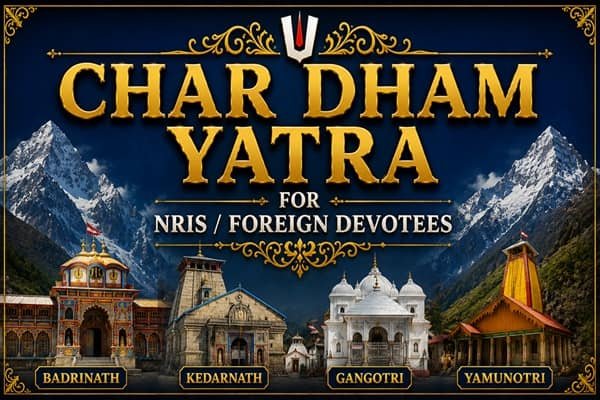
You live in New York, London, or Dubai. You have not visited India in years. But the call of the Himalayas grows stronger each passing year. The four sacred temples, Yamunotri, Gangotri, Kedarnath, and Badrinath, await. The challenge is real. Limited vacation days. Unfamiliar terrain. Language barriers. And the sheer logistics of organizing a pilgrimage across remote mountain roads. This is why Char Dham Yatra packages for NRIs exist. They take the stress out of planning so you can focus entirely on the spiritual journey.
The Char Dham Yatra is not a regular tourist trip. It is a pilgrimage that involves high altitudes, long drives, trekking, and unpredictable mountain weather. For someone coming from abroad, organizing this independently can feel overwhelming. The right package solves this. It covers your airport pickup, hotels, meals, transport, and even assistance at the temples. This guide covers everything you need to know. Visa requirements. Best time to visit. Package types. Costs. What is included and what is not. By the end, you will know exactly how to plan your sacred journey.
What is the Char Dham Yatra and Why NRIs Choose Packages
The Char Dham refers to four holy shrines in the state of Uttarakhand. Yamunotri, the source of the Yamuna River. Gangotri, the origin of the Ganges. Kedarnath, one of the twelve Jyotirlingas of Lord Shiva. Badrinath, the abode of Lord Vishnu. Visiting all four in a single journey is considered highly meritorious. It is believed to wash away sins and lead to salvation.
For NRIs, the challenge is not the faith. The faith is strong. The challenge is the execution. The yatra requires driving through narrow mountain roads. The distances are long. The weather changes in minutes. Accommodation in remote areas is basic. Trekking at Yamunotri and Kedarnath requires physical effort. A package simplifies all of this. You land in India. A driver meets you. Your hotels are booked. Your meals are arranged. You do not have to negotiate with local vendors or worry about road closures. The package operator handles the logistics.
Visa and Documentation Requirements for International Pilgrims
Before you book any package, ensure your travel documents are in order. Foreign nationals need a valid Indian visa. The Tourist e Visa is the most common option. You can apply online through the official Indian government portal. The e Visa is available for 30 days, 1 year, or 5 years. Most pilgrims from the USA, UK, UAE, Canada, and Australia use this.
OCI card holders, Persons of Indian Origin, do not need a separate visa. Your OCI card along with your foreign passport is sufficient. Carry both the original and a few photocopies. Keep a digital copy on your phone as well.
The e Visa application requires a passport with at least six months of validity from your date of arrival. You need a recent passport size photograph and a scanned copy of your passport’s first and last page. The fee is paid online. Approval typically arrives within 3 to 5 business days. Once approved, print the e Visa and carry it with you. Indian immigration will stamp your passport upon arrival.
Some areas near the Char Dham circuit, especially close to the Indo China border, may require special permits. These are called Protected Area Permits or Inner Line Permits. Most standard yatra packages do not enter these restricted zones. But if your itinerary includes places like Mana Village beyond Badrinath, check with your package provider. They usually arrange the permits on your behalf.
Best Time to Plan Your Char Dham Yatra from Abroad
The Char Dham temples are not open all year. Heavy snowfall blocks access during winter. The temples typically open in late April or early May and close in October or early November. The exact dates change each year based on Hindu calendar calculations. For 2026, the expected opening is around the last week of April.
The best time for international pilgrims is May to June. The weather is pleasant. The skies are clear. The views of the snow capped Himalayas are spectacular. The temperatures are comfortable during the day, though nights can be cold. This period is peak season. Expect larger crowds and higher package prices.
The second best window is September to early October. The monsoon rains end by September. The air is fresh. The rivers are full. The crowds are thinner compared to May June. This is an excellent time for those who prefer a quieter, more peaceful yatra.
Avoid the monsoon months of July and August. Heavy rainfall causes landslides and road blockages. Your yatra could get delayed or stuck. Also avoid the winter months from November to April. The temples are closed. The roads are inaccessible.
How to Reach the Starting Point from USA, UK, UAE
Your international flight will land at Indira Gandhi International Airport in Delhi. Delhi is the main hub for most Char Dham packages. From here, your package operator takes over. Some packages include a driver who picks you up directly from the airport. Others may arrange a train or flight to Dehradun, which is closer to the hills.
The flight from Delhi to Dehradun’s Jolly Grant Airport takes about one hour. This is a good option for those who want to reduce road travel. From Dehradun, the yatra begins by road. If you choose the road option from Delhi, the drive to Haridwar or Rishikesh takes about 5 to 6 hours. These towns are the traditional starting points of the Char Dham route.
For NRIs coming from the USA, direct flights to Delhi are available from New York, Chicago, Newark, and San Francisco. British Airways, Air India, and United operate these routes. From the UK, direct flights from London Heathrow to Delhi take about 8 to 9 hours. From the UAE, Dubai to Delhi is a short 3 to 4 hour flight.
Always book your international flights at least two to three months in advance. Peak yatra season sees high demand. Last minute tickets are expensive. Also, include a buffer day after arrival. Do not start the yatra immediately. Jet lag is real. Give yourself a day or two to rest in Delhi or Haridwar before heading into the mountains.
Types of Char Dham Packages for NRIs
Not all packages are the same. You have three main categories to choose from. Budget packages, deluxe luxury packages, and helicopter packages. Your choice depends on your budget, time availability, and comfort needs.
Budget packages cost between INR 21,000 and INR 30,000 per person. These include shared vehicles, basic hotels, breakfast and dinner, and temple assistance. The accommodation is clean but simple. Do not expect luxury. This is for pilgrims who prioritize the spiritual journey over comfort. The duration is 10 to 12 days by road.
Deluxe or luxury packages cost between INR 32,000 and INR 55,000 per person. These include private cars, better hotels with more amenities, guided temple assistance, and priority darshan in some cases. The vehicles are comfortable Toyotas or SUVs. The hotels are rated properties. Meals are included. The pace is more relaxed. This is the most popular choice for NRIs from the USA, UK, and Dubai.
Helicopter packages cost around INR 2,20,000 per person. These are the fastest and most comfortable. You travel between temples by helicopter. Road travel is minimal. You get VIP darshan at Kedarnath and Badrinath. The duration is only 5 to 6 days on ground. This is ideal for elderly pilgrims, those with health concerns, or those with very limited vacation time.
Some operators offer mixed packages. Road travel for Yamunotri and Gangotri. Helicopter for Kedarnath and Badrinath. The cost falls between deluxe and full helicopter packages. The duration is around 8 to 10 days.
What Is Included in a Typical NRI Package
A good Char Dham package for NRIs includes airport pickup and drop off. You do not have to arrange taxis or figure out local transport after a long flight. The operator meets you at the airport with a name sign. This is a small thing, but after 15 hours of flying, it means everything.
Accommodation is included for all nights of the yatra. The hotels are pre booked. You do not have to search for rooms after a long day of driving. Breakfast and dinner are included. Lunch is usually not included because you may be on the road or at the temples during lunchtime. But your driver can stop at restaurants along the route.
Transportation is included. A private car, tempo traveler, or bus depending on your group size. The driver is experienced with mountain roads. This is crucial. The Char Dham route has sharp turns, steep climbs, and narrow stretches. A local driver knows the roads and the weather patterns.
Temple assistance is included. A guide or coordinator helps you with darshan procedures, queue management, and local rituals. If you need palki or pony service at Yamunotri or Kedarnath, some packages include it. Others offer it as an add on. Clarify this before booking.
What Is Not Included in the Package
International flights are not included. You book your own tickets to India. Domestic flights within India, like Delhi to Dehradun, may or may not be included. Read the fine print. Travel insurance is not included. Buy it separately. It covers medical emergencies, trip cancellations, lost luggage, and weather related delays. For a high altitude pilgrimage, insurance is non negotiable.
Personal expenses like laundry, phone calls, souvenirs, and extra snacks are not included. Lunch is typically not included. Meals outside of breakfast and dinner are your responsibility. Tips for drivers, guides, and hotel staff are not included. These are at your discretion.
Palki, pony, or helicopter services at Yamunotri and Kedarnath are not included in basic packages. If you want these, either choose a package that includes them or pay locally. Temple entry fees and special darshan tickets are also not included in most packages. Your package gets you to the temple. The darshan itself is free or requires a nominal fee.
Any extra nights due to flight delays, bad weather, or personal reasons are not included. If a landslide blocks the road and you are stuck in a town for an extra day, that night’s accommodation and meals are your responsibility. This is rare, but it happens. Keep emergency cash for such situations.
Sample Itinerary for NRIs by Road
A standard road itinerary for NRIs from Delhi takes 10 to 12 days on ground. Day one is arrival in Delhi. You rest at a pre booked hotel. Day two, drive from Delhi to Barkot, a journey of about 7 to 8 hours. Day three, early morning drive to Janki Chatti, then a 6 kilometer trek or palki ride to Yamunotri Temple. Return to Barkot.
Day four, drive from Barkot to Uttarkashi, about 5 to 6 hours. Visit Kashi Vishwanath Temple in the evening. Day five, early morning drive to Gangotri Temple, about 4 hours one way. Return to Uttarkashi. Day six, long drive from Uttarkashi to Guptkashi, about 8 to 9 hours.
Day seven, drive to Sonprayag or Gaurikund, then the 16 kilometer trek or helicopter ride to Kedarnath. Stay overnight in Kedarnath. Day eight, morning darshan at Kedarnath, then trek back down and drive to Guptkashi. Day nine, drive from Guptkashi to Badrinath, about 7 to 8 hours.
Day ten, morning darshan at Badrinath Temple, visit Mana Village and Tapt Kund, then drive to Srinagar or Rudraprayag. Day eleven, drive back to Haridwar or Rishikesh. Optional evening Ganga Aarti. Day twelve, drive to Delhi airport for your flight home.
This is a packed schedule. It involves long hours in the car. The roads are winding. Do not expect smooth highways. This is the Himalayas. The journey is as much a part of the pilgrimage as the darshan.
Also Read : NRI Darshan Tirumala 2026: Timings, Ticket Cost, Documents & Supadam Entry Guide
Helicopter Itinerary for Time Constrained NRIs
If you have only one week or less, the helicopter package is your best option. Day one, fly into Delhi and then take a short flight to Dehradun. Overnight in Dehradun. Day two, helicopter to Kharsali near Yamunotri, then a short trek to the temple. Return by helicopter. Overnight in Dehradun or Harsil.
Day three, helicopter to Gangotri. Darshan and return. Day four, helicopter from Dehradun or Phata to Kedarnath. VIP darshan. Return to the base. Day five, helicopter to Badrinath. VIP darshan. Visit Mana Village. Return to base. Day six, drive or fly back to Delhi. Depart.
The helicopter package costs significantly more but saves days of road travel. The VIP darshan means you do not stand in long queues. This is especially valuable for elderly NRIs or those with knee or back problems.
Essential Packing and Health Tips
Pack layers. The weather in the Himalayas changes fast. Mornings are cold. Afternoons can be warm. Evenings are cold again. Carry thermal innerwear, fleece jackets, a heavy winter jacket, gloves, and a woolen cap. Even in May, Kedarnath and Badrinath can be near freezing.
Comfortable walking shoes are essential. You will walk on uneven stone paths, climb steps, and possibly trek. Do not wear new shoes on the yatra. Break them in before you leave home. A walking stick, or trekking pole, is helpful. You can buy one locally, but carrying a foldable one from home is better.
Altitude sickness is a real risk at Kedarnath, which sits at 11,755 feet. Symptoms include headache, nausea, dizziness, and shortness of breath. Acclimatize by spending a night at a lower altitude before going up. Drink plenty of water. Avoid alcohol. Carry prescribed medication for altitude sickness. If symptoms become severe, descend immediately.
Carry a basic first aid kit. Pain relievers, bandages, antiseptic cream, and your regular prescription medicines. Also carry tablets for upset stomach and nausea. The food and water in the mountains may be different from what your system is used to. Drink only bottled or boiled water.
Keep digital copies of all your documents. Passport, visa, OCI card, travel insurance, and package confirmation. Save them on your phone and also email them to yourself. Carry some backup printed copies in your luggage. Keep a separate set with your travel partner, if traveling with family.
Frequently Asked Questions for NRIs
Do I need a visa for Char Dham Yatra? Yes, foreign nationals need a valid Indian visa. OCI card holders do not need a visa. Apply for the e Visa online well before your travel dates.
What is the best time for NRIs to do Char Dham Yatra? May to June and September to early October. The weather is pleasant. Avoid monsoon months from July to August.
How many days are required for Char Dham Yatra from abroad? For road packages, plan 12 to 14 days including international travel and rest. For helicopter packages, plan 7 to 9 days total.
Are international flights included in Char Dham packages? No. You book your own international flights to India. The package starts from Delhi, Dehradun, or Haridwar.
Can elderly NRIs do the Char Dham Yatra? Yes, but choose a helicopter package or a package that includes palki and pony services. The trekking at Yamunotri and Kedarnath is difficult for those with limited mobility.
What documents do I need to carry? Valid passport with visa or OCI card. Travel insurance. Package confirmation. Emergency contact numbers. And a few passport size photographs.
Is travel insurance mandatory? It is highly recommended. The yatra involves high altitudes, long drives, and unpredictable weather. Medical emergencies, trip cancellations, and delays are covered by a good travel insurance policy.
Conclusion
Char Dham Yatra for NRIs is a journey of a lifetime. The mountains are majestic. The temples are ancient. The faith is palpable. But the logistics are complex. A good package removes the complexity. It gives you the freedom to pray, to stare at the Himalayan peaks, to breathe the cold mountain air, and to feel the presence of the divine, without worrying about where you will sleep or eat next. Choose your package based on your time, budget, and health. Pack wisely. Prepare your body for the altitude. And then go. The Lord awaits.