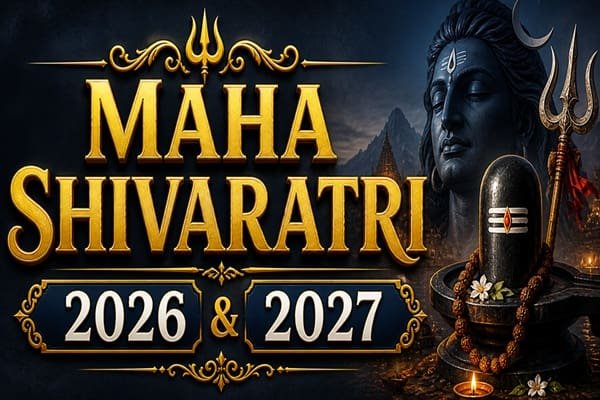
Maha Shivaratri is not a festival of lights or colors. It is a night of stillness. The temples stay open. The devotees stay awake. The lamps burn through the darkness. Unlike Holi or Diwali, there is no feasting here. There is fasting. There is meditation. There is the slow, rhythmic chanting of Om Namah Shivaya. The name means the Great Night of Shiva. It is the night when Lord Shiva drank the poison that emerged from the churning of the ocean. His throat turned blue. He became Neelkanth. He saved the universe. That act of selflessness, of taking the poison so others could have the nectar, is what this night honors.
For the devotee, Maha Shivaratri is not about celebrating an event that happened in the past. It is about participating in the same energy. The night is considered the most auspicious time for spiritual practice. The veil between the material and the divine is thin. Meditate for one night, and the benefits are said to equal months of practice. That is the belief. That is why millions stay awake.
Maha Shivaratri Dates for 2026 and 2027
The Hindu calendar is lunar. The dates change every year. Maha Shivaratri falls on the Krishna Paksha Chaturdashi, the 14th day of the dark fortnight, in the month of Phalguna.
In 2026, Maha Shivaratri will be observed on Sunday, 15 February 2026. The Chaturdashi Tithi begins on 15 February and ends on 16 February. The most auspicious time for worship is the Nishita Kaal, the midnight period. In 2027, Maha Shivaratri will fall on Saturday, 6 March 2027. The Chaturdashi Tithi starts at 12:04 PM on 6 March and ends at 1:46 PM on 7 March. The Parana time, when the fast is broken, is from 6:47 AM to 1:46 PM on 7 March.
The night is divided into four prahars, each lasting about three hours. Devotees perform puja during each prahar. The first prahar is from 6:28 PM to 9:32 PM. The second is from 9:32 PM to 12:37 AM. The third is from 12:37 AM to 3:42 AM. The fourth is from 3:42 AM to 6:47 AM. The Nishita Kaal puja, the most important, is from 12:13 AM to 1:02 AM.
The Spiritual Significance of the Night
Three stories are told. The first is the marriage of Shiva and Parvati. Their union represents the balance between consciousness and energy. The second is the Tandava, the cosmic dance of Shiva. This dance is the cycle of creation, preservation, and destruction. The third, and most popular, is the story of the poison. When the gods and demons churned the ocean to obtain the nectar of immortality, a deadly poison emerged first. No one could touch it. Lord Shiva drank it. Parvati, his consort, pressed his throat to stop the poison from going down. It stayed in his neck. He turned blue.
From a yogic perspective, the poison represents the negativity stored in the human psyche. Anger, greed, jealousy, fear, all of it is poison. Maha Shivaratri is the night to burn that poison. Fasting purifies the body. Chanting purifies the speech. Meditation purifies the mind. By morning, the devotee is lighter. That is the real purpose of the fast.
Fasting Rules and Food Guidelines
There is no single rule. Some observe a strict Nirjala fast, no food and no water. Others observe a Phalahar fast, eating only fruits and drinking milk. Some eat a single meal. The choice depends on health, age, and capacity.
The food allowed is satvik. Fruits, bananas, apples, dates. Milk, curd, buttermilk. Sabudana khichdi, potatoes cooked without spices, makhana, nuts. Water is allowed, except in the strictest fast.
What is avoided is grains, rice, wheat, and anything made from them. Onion and garlic are avoided. Non vegetarian food is strictly prohibited. Alcohol and tobacco are not allowed.
The fast begins at sunrise on the day of Maha Shivaratri. It ends the next morning after the Parana time. The fast is broken with prasad, the food offered to Lord Shiva. A simple meal of fruits and milk is ideal.
Puja Vidhi How to Worship at Home
The puja can be performed at home or at a temple. At home, clean the puja area. Place a Shiva Lingam or a picture of Lord Shiva. Light a diya. Offer fresh water, milk, honey, and curd. Pour them over the Lingam while chanting Om Namah Shivaya.
Offer Bel Patra. This leaf is considered the most sacred offering to Shiva. The trifoliate shape represents the three eyes of the Lord. Offer flowers, white or red. Offer fruits, sweets, and dry fruits.
Chant the mantras. The simplest is Om Namah Shivaya. Chant it 108 times. The Maha Mrityunjaya Mantra is for protection and health. Om Tryambakam Yajamahe, Sugandhim Pushtivardhanam, Urvarukamiva Bandhanan, Mrityor Mukshiya Maamritat.
If you do not know the mantras, sit in silence. Light a lamp. Watch the flame. The devotion matters more than the words.
Also Read : Muramalla Temple Darshan 2026: Nitya Kalyanam Booking, Timings & Sevas
Night Worship and Staying Awake
Staying awake all night is called jaagran. It is not about fighting sleep. It is about keeping the mind engaged in devotion. Sing bhajans. Listen to kirtans. Read stories of Shiva from the Puranas. Meditate.
Temples organize night long programs. The priests perform puja in each prahar. The devotees sit on the floor, their eyes fixed on the Lingam. The bells ring. The incense smoke rises. The hours pass.
If you are at home, do not spend the night watching television. Do not scroll through your phone. The night is for the Lord. Give it to him.
Celebrations Across India
In Varanasi, the Kashi Vishwanath Temple is packed. The streets are lit with lamps. Devotees walk barefoot, carrying water from the Ganges to offer to the Lingam. In Ujjain, the Mahakaleshwar Temple performs the famous Bhasma Aarti. In Somnath, the waves crash against the shore as the priests chant. In Srikalahasti, the Rahu Ketu pooja is performed.
In West Bengal, devotees fast and visit the Tarakeshwar Temple. In Andhra Pradesh, the Kalahasteswara Temple stays open all night. In Karnataka, the Sidhlingappa Fair is held. In Kashmir, the Hayrath or Vatuk Puja is performed in homes.
Each region has its own tradition. But the core remains the same. A night of prayer. A night of fasting. A night of devotion.
Do’s and Don’ts
Do wake up early. Take a bath. Wear clean clothes. Men should wear white or saffron. Women should wear sarees or salwar kameez. Do visit a Shiva temple if possible. Do perform Abhishekam at home. Do donate food or money to the poor. Feed animals. Cows and dogs are especially blessed on this day.
Do not consume alcohol or non vegetarian food. Do not sleep during the night. Do not engage in arguments or gossip. Do not cut hair or nails. Do not eat rice or wheat based food if fasting.
The rules are not meant to be harsh. They are meant to raise your awareness. When the body is light, the mind is sharp. When the mind is sharp, the prayer is deep.
Maha Shivaratri 2026 and 2027
Maha Shivaratri 2026 falls on 15 February. Maha Shivaratri 2027 falls on 6 March. Mark the dates. Plan your fast. Plan your puja. The Lord is not difficult to please. A handful of water poured on a stone lingam with a sincere heart is enough. A single chant of Om Namah Shivaya said with devotion is enough. A night of staying awake, not with effort, but with love, is enough. The poison that Shiva drank was for the universe. The poison you carry is only yours. This night, offer it to him. He will take it. He always does.